Quick summary
- The half-day tour is listed from US$125, so a morning or afternoon on the reef starts at that figure before date and options change it.[1]
- It runs for 4 hours, including boat travel, so it suits a Cairns day that also has room for markets, rainforest walks or just a slow breakfast.[1]
- Travellers rate it 4.73 from 1,768 reviews, giving you a solid read on how the trip runs in practice.[1]
- An English-speaking instructor leads the tour, which helps first-time snorkellers feel confident before they put their face in.[1]
- Book today with payment later; if your plans alter, you can cancel no less than 24 hours before and get all your money back.[1]
| Cairns Half-Day Snorkelling | All-Inclusive Half-Day Snorkel | Premium Outer Reef Snorkel | |
|---|---|---|---|
| From | from US$125[1] | from US$139[2] | from US$137[3] |
| Duration | 4 hours[1] | 5 hours[2] | 5 hours[3] |
| Instructor | English[1] | English[2] | English[3] |
| Cancellation | Free cancellation, full refund[1] | Free cancellation, full refund[2] | Free cancellation, full refund[3] |
| Rating | 4.73[1] | 4.85[2] | 4.76[3] |
While marine stingers may be present throughout the entire year in tropical Queensland, the risk associated with these two types of potentially dangerous jellyfish are higher during the ‘marine stinger season’ that typically runs from November through to May.
A sensible, well-rated half-day on the reef
Know this first
What comes with the fare
The half-day tour from Cairns is a straightforward way to put a name and a face to the Great Barrier Reef. Choosing a great barrier reef snorkeling tour Cairns is easier when you start with a half-day plan. The published fare is from US$125, and the whole trip runs for 4 hours.[1] That is long enough for a proper taste of coral gardens, fish life and open water, yet short enough to leave the afternoon free for the Cairns Esplanade, a rainforest walk or simply a long lunch.
The tour is led by an English-speaking instructor.[1] You will not be left to guess where to go or how to behave around marine life. Reserve now and pay later is possible, and if your plans change you can cancel as much as 24 hours ahead for a full refund.[1] That combination makes it a low-stress pick for families, first-time snorkellers and anyone whose Cairns dates are still shifting.
Separate from the advertised fare, the Great Barrier Reef Environmental Management Charge for a full-day passenger is $8.50 per day.[8] This half-day runs 4 hours, so the booking page is the place to see how it applies.[1] Adding that charge to the from-price gives you a truer sense of what the day will cost.
Photos you will want to take yourself
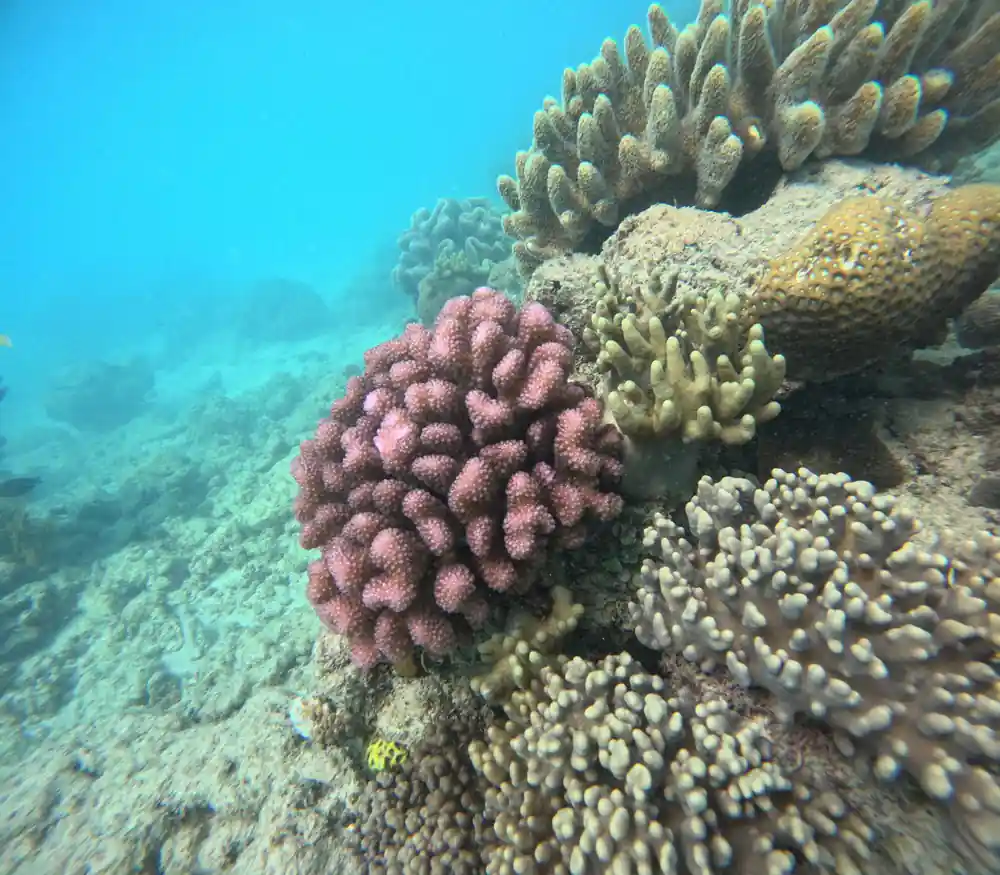
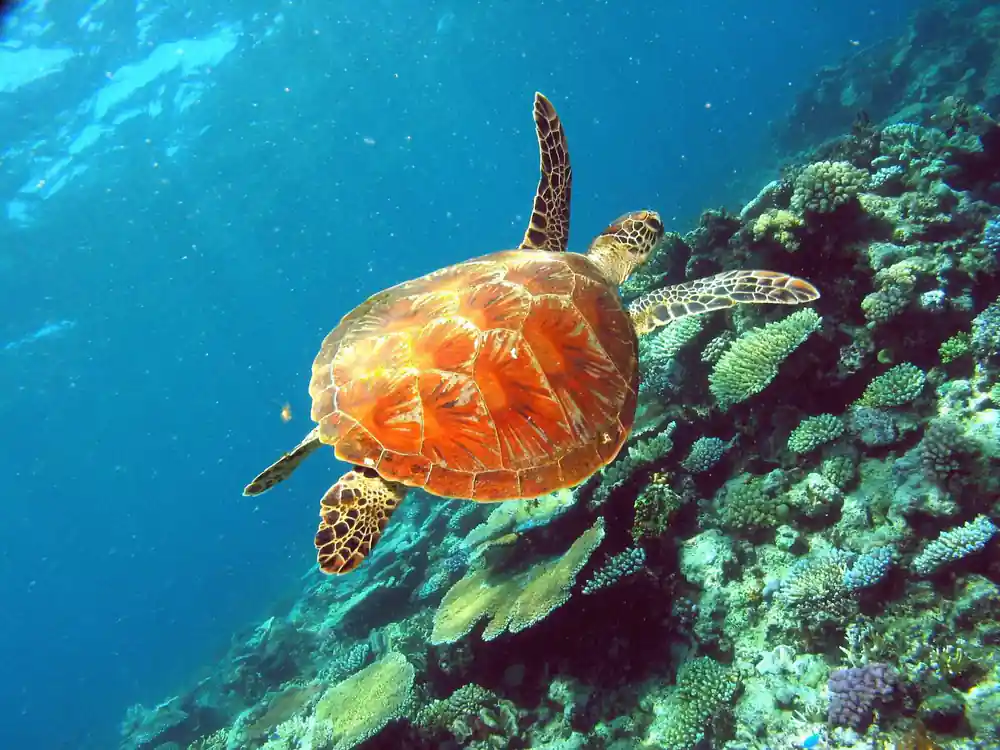
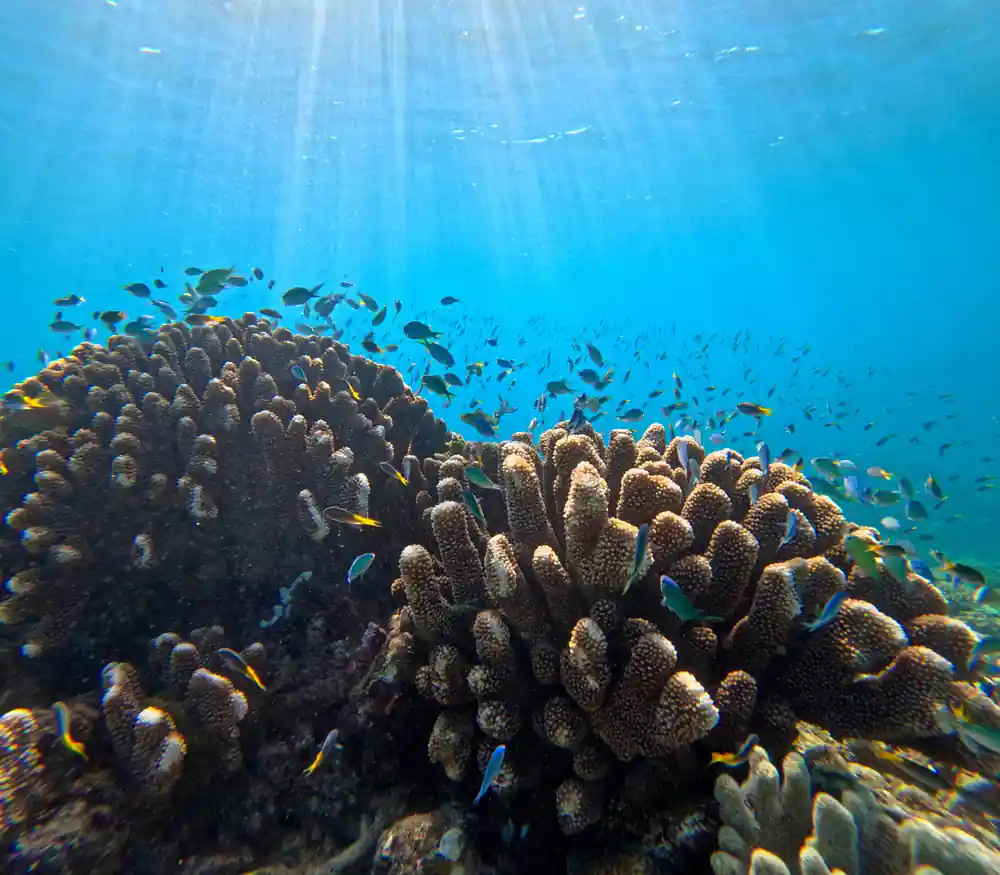
The underwater show does the selling itself. The Great Barrier Reef is home to over 1,600 species of fish, over 600 species of corals, and six of the world's seven species of marine turtle.[9] There is no shortage of subjects for a small camera or a rental GoPro. The reef's colours are not a screen saver; they are a living, moving layer of life that shifts as fish drift over branching coral. On a half-day trip you will have a defined window to find a coral head, float above a school, and come back with your own footage or a clear memory.
If you would rather leave the camera behind, the memory of the colour and movement is the part nobody can charge extra for. Inshore reefs typically spawn in October, while outer reefs spawn in November or December.[10] A visit in the right month can add a shimmering layer to the experience. Still, any season can offer clear water and a busy reef, and the best camera setting is the one that gets you in the water.
You do not need a bulky housing or a waterproof phone case to enjoy the day. The crew and the boats are used to handling wet gear, and the key is to keep it simple: a lanyard, a dry bag and a mask that does not fog. If you do capture a good shot, share it, but do not let the viewfinder replace the view.
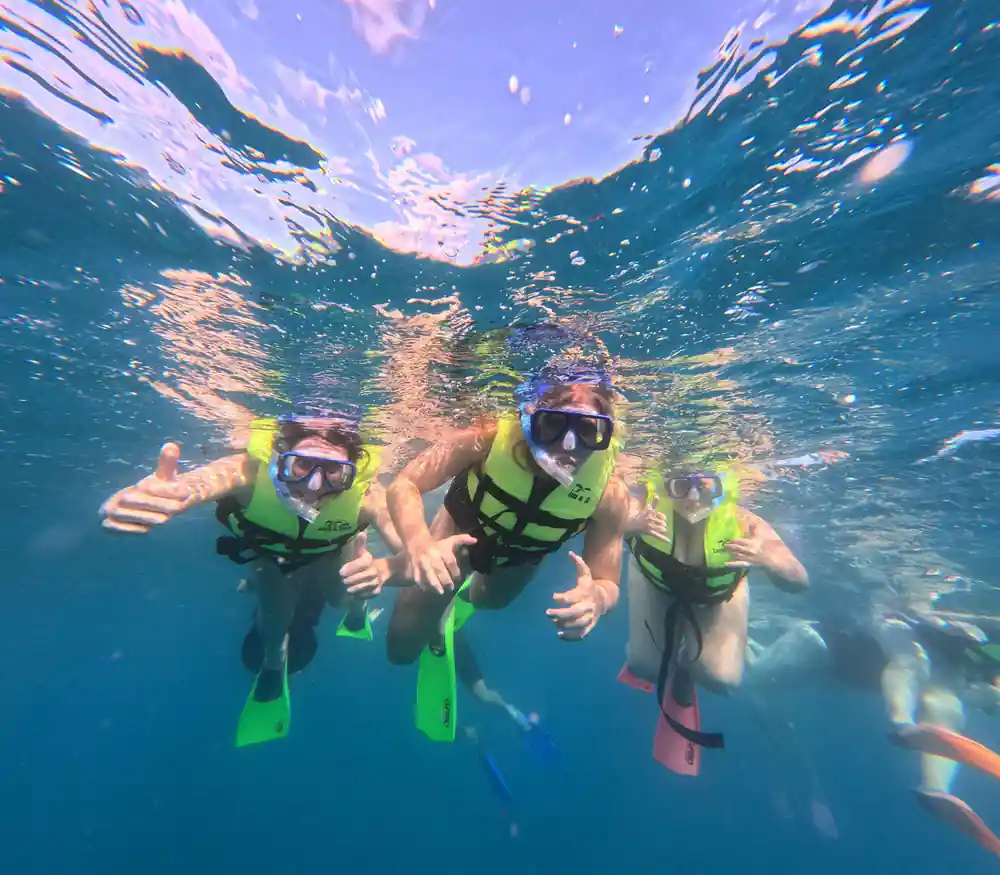
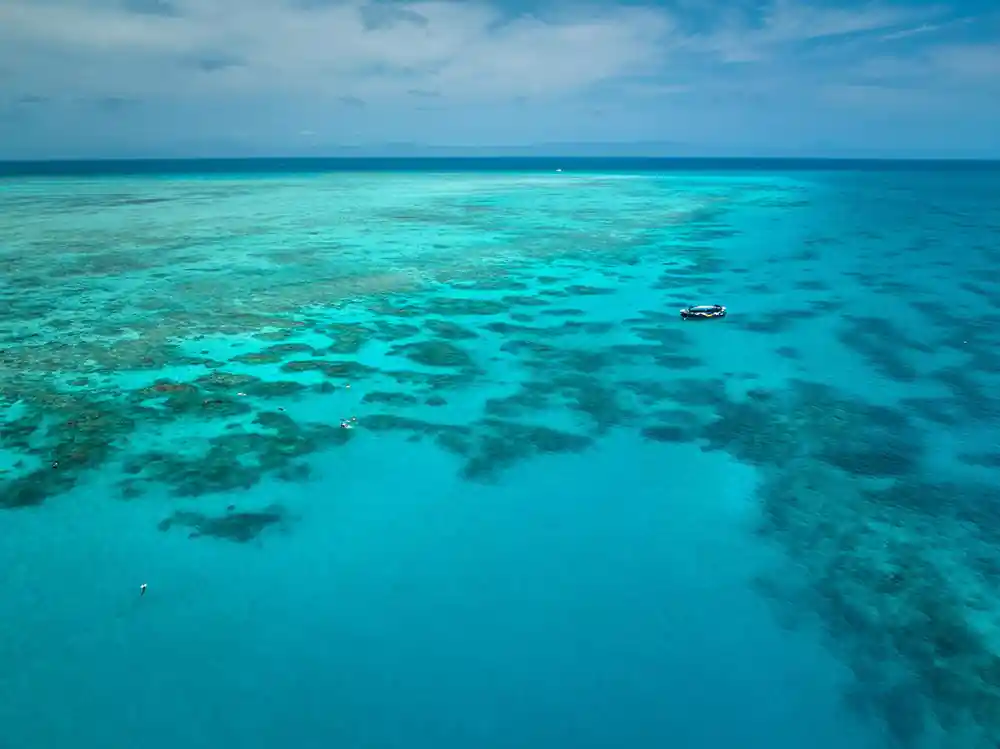
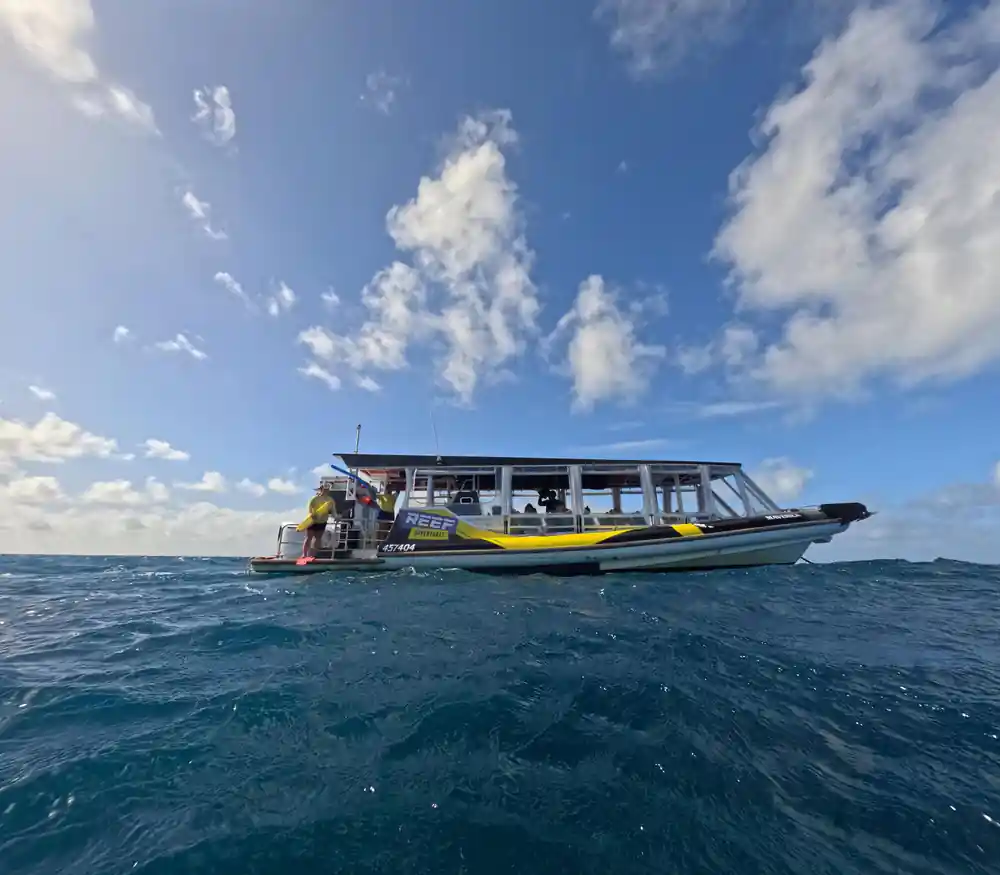
A moored reef boat sits over clear turquoise water, with snorkellers spread out behind the stern.
Stinger suits, and what they're for
Dangerous jellyfish become a greater risk during the marine stinger season in tropical Queensland, which usually runs November through to May.[6] It does not mean you should skip the water. It means you should treat the stinger suit as part of the plan.
On the boat, ask the crew for fitting advice before you jump in. The suit works by covering skin that a jellyfish tentacle would otherwise brush, and the simple habit of wearing one makes the reef more comfortable for swimmers of all levels. In the tropical sun it can also add a little extra cover while you float.
For most snorkellers, putting on a stinger suit is a small price for the calm it brings. It also keeps you a little warmer in the water, which is never a bad thing on a reef morning.
Hiring a wetsuit or a prescription mask
During summer (December to February), the water off Cairns averages 29°C; during winter (June to August), it averages 24°C.[5] A wetsuit is more about comfort and protection than extreme cold. In winter, the lower end of that range can feel brisk after half an hour of floating; in summer, a shorty or thin suit keeps you comfortable while you look down at the coral.
For anyone who wears glasses or contact lenses, a prescription mask is a sensible upgrade to arrange before the day. Trying to read the reef through fogged glass is no fun, and a well-fitting mask that matches your eyesight makes a real difference. The crew will help you fit whatever mask you bring or hire, but the choice of prescription lens is yours to sort out in advance.
A correctly fitted mask should sit on your face without needing to be strapped on like a harness. Test it by placing it gently against your skin and breathing in; if it stays put, the seal is good. Take a moment to spit and rinse the lens or use a defogger. Clear glass is worth more than any filter on a reef day.
from US$125
Half-day from Cairns with an English-speaking instructor; book now, pay later and cancel free up to 24 hours ahead.[1]
Drinks, and what to plan around
On a boat trip, the practical drinks question is water and sun. Roughly May to October is Cairns's dry season, and roughly December to March is its wet season.[7] Bring your own water bottle in most cases, and let the forecast tell you how much sunblock you need before you step onto the deck.
At the end of the trip, cold drinks are easy to find back onshore, and Cairns has plenty of places to sit with a juice or a coffee while you compare reef stories. The published price for this tour is from US$125, and the booking page is the place to check for optional extras before you pay.[1]
A half-day is too short for a big picnic. Keep food simple. A banana, a muesli bar and water are enough to keep energy up between boat rides, and anything you bring should live in a small dry bag. Hydration is the priority; tropical humidity pulls water out of you faster than you notice.
Gear you don't need to bring
Packing for a half-day reef trip is mostly about subtracting, not adding. You will want a swimsuit, a towel, sun protection and a change of clothes; the rest is easy to leave at the hotel. The 4-hour itinerary leaves little time for extra bags.[1] Travel light and keep your hands free for the ladder.
If you have your own mask or snorkel, bringing it is fine, but it is not essential for a first visit. A well-fitting rental is often better than a buy-it-cheap mask that leaks. Leave behind anything heavy, fragile or valuable; a reef boat has wet seats, salt spray and a lot of people in wetsuits, and your phone or camera is safest in a small dry bag.
You can also skip the urge to bring a novel, a full change of shoes and a separate bag for every item. The boat does not have unlimited dry storage, and the day moves in short bursts of activity: board, ride, snorkel, ride back. Pack for those four moments and you will be ready.
How the reef fits around Cairns
Cairns is the usual launch point for the reef, and the city understands reef trips well. From the Reef Fleet Terminal at 1 Spence Street, Cairns, tour boats head out to the reef.[4] The meeting point is simple and central. On the Outer Reef, a proper boat ride away, the Moore Reef pontoon is located 47 km offshore.[11] About 45 minutes by boat gets you to Green Island, which lies 27 km east of Cairns.[12]
The Great Barrier Reef system is vast: it spans more than 2,300 kilometres along the northeast coast of Australia and includes some 3,000 individual coral reefs.[13] Even a half-day on the water gives you a true sample of that scale, and the coral cover in the northern region has been trending upward, with hard coral cover increasing from 30.0% in 2025 to 35.1% in 2026, according to monitoring.[14] That is encouraging context for snorkellers who want to see a living reef, not just a postcard.
When you compare great barrier reef tours Cairns operators, look at departure points, boat size and how much time is actually spent in the water. This half-day tour is one of the simpler options, and its 4-hour format[1] makes it easy to slot into a broader Queensland itinerary. From there, the great barrier reef snorkeling tour for you is the one that matches your energy, your budget and the weather on the day.
Distances travellers ask about
Distances: 27 km from Cairns to Green Island[12], 47 km offshore for Moore Reef pontoon[11], 80 km from Airlie Beach to Hardy Reef[15].
Compare half-day reef trips from Cairns
From-prices in USD: US$125[1], US$139[2], US$137[3].
When to go
Plan your half-day
Book the tour
You can book from US$125, reserve now and pay later, and get free cancellation until 24 hours before.[1]
Confirm the details
Note the 4-hour duration and confirm the meeting point at the Reef Fleet Terminal, 1 Spence Street, Cairns.[1][4]
Pack light
Pack swimwear, towel, sun protection and a change of clothes; leave heavy bags at the hotel.
Dress for the water
Ask about stinger suits, especially from November to May, and wear a wetsuit if you feel the cold.[6]
Arrive early
Arrive early, let the crew fit your mask or suit, and keep water handy for the ride.
Find your half-day spot on the reef
from US$126Reserve now & pay later