Quick summary
- The boat works between two reef sites on the outer Great Barrier Reef, and which one you visit is decided on the day rather than fixed in advance.
- The crew pick the site based on shelter from the wind and how clear the water looks that morning, not from a printed schedule.
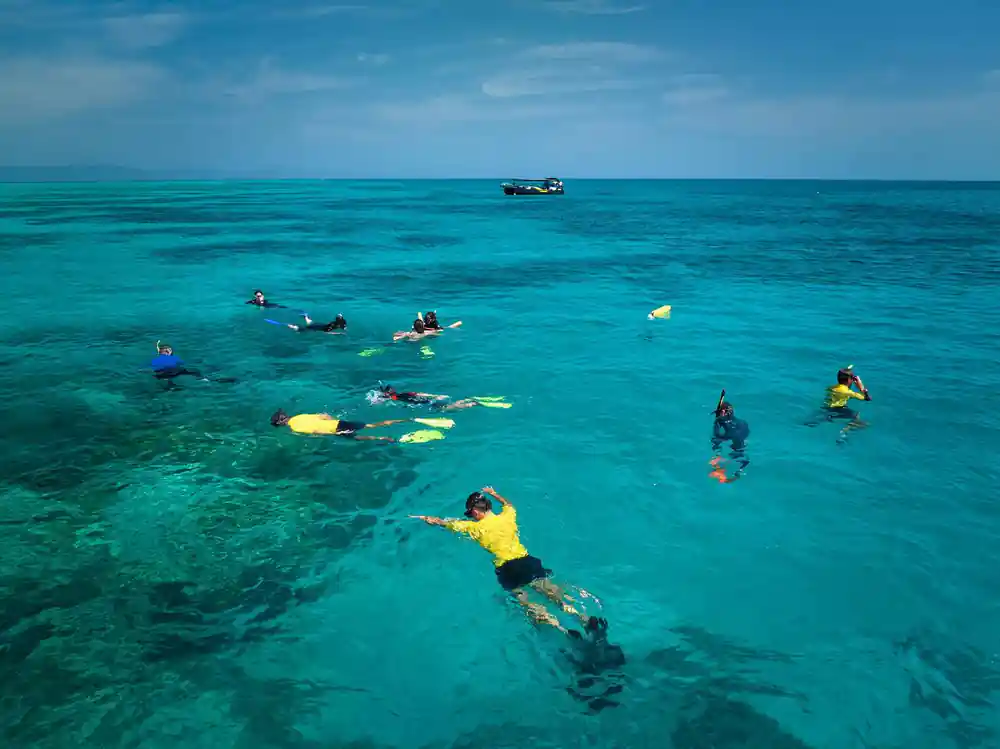
- A snorkel guide swims with the group for the full 1.5 hours of guided snorkelling, rather than waiting back on the boat.
- Coral, reef fish, giant clams and turtles are common sights on this stretch of reef, though nothing in the water is ever guaranteed.
One Reef System, Many Reefs
Say the Great Barrier Reef and it sounds like a single wall of coral running up the Queensland coast. It isn't. It is a system of thousands of individual reefs, patches and shoals spread across open water, each with its own shape, its own exposure to wind and current, and its own conditions on any given day.
That matters for a half-day trip out of Cairns. An operator working this stretch of the outer reef is rarely limited to one spot. A boat that can only ever go to a single reef has no answer for the day the wind turns against it. A boat with more than one mooring to choose between does.
There is no single, fixed answer to where the best place to snorkel the Great Barrier Reef from Cairns actually is, because the reef itself is not one place. It is a spread of individual sites, and the best one on a given morning is whichever is working best that morning, not whichever has the best name.
A Choice Between Two Reefs
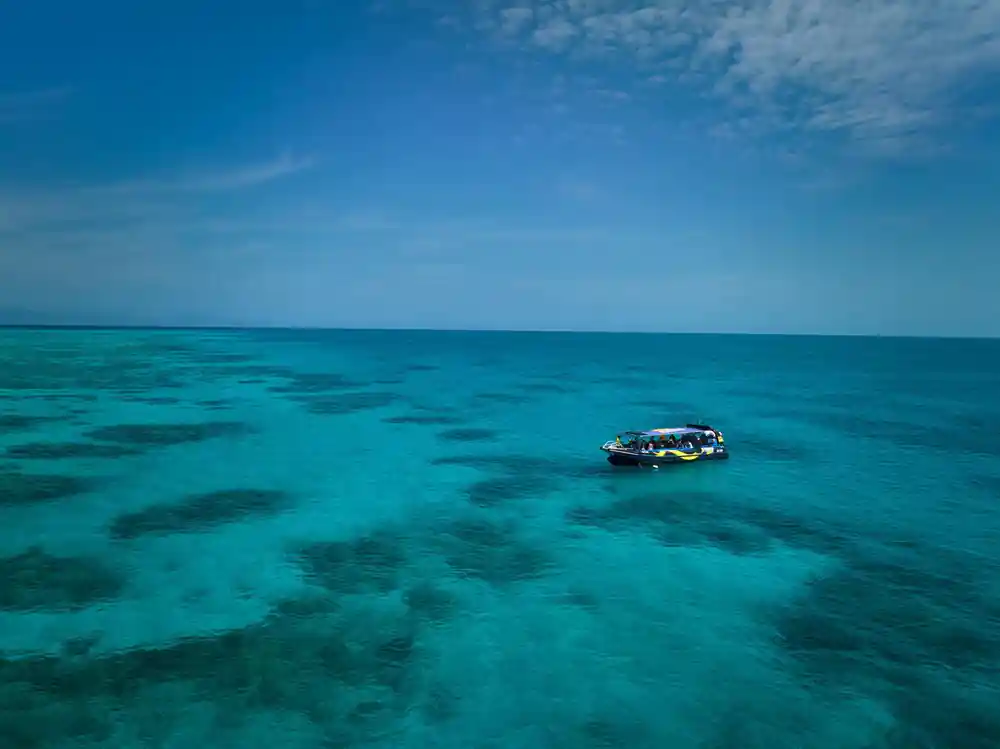
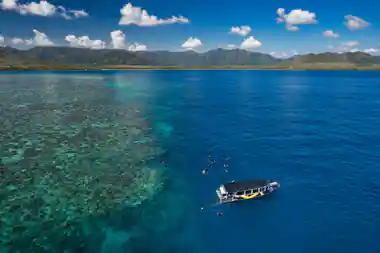
This trip works between two reef sites on the outer Great Barrier Reef. Which one you actually snorkel at is not fixed months ahead and is not printed on the listing before you sail. It is decided by the crew, on the day, once they know what the wind, the swell and the water are doing.
That is a deliberate way of running the trip, not a gap in the planning. Holding two reef sites rather than one means the boat is not committed to whichever happens to be named on a brochure. It is committed to getting guests into water worth snorkelling in, wherever that turns out to be that morning.
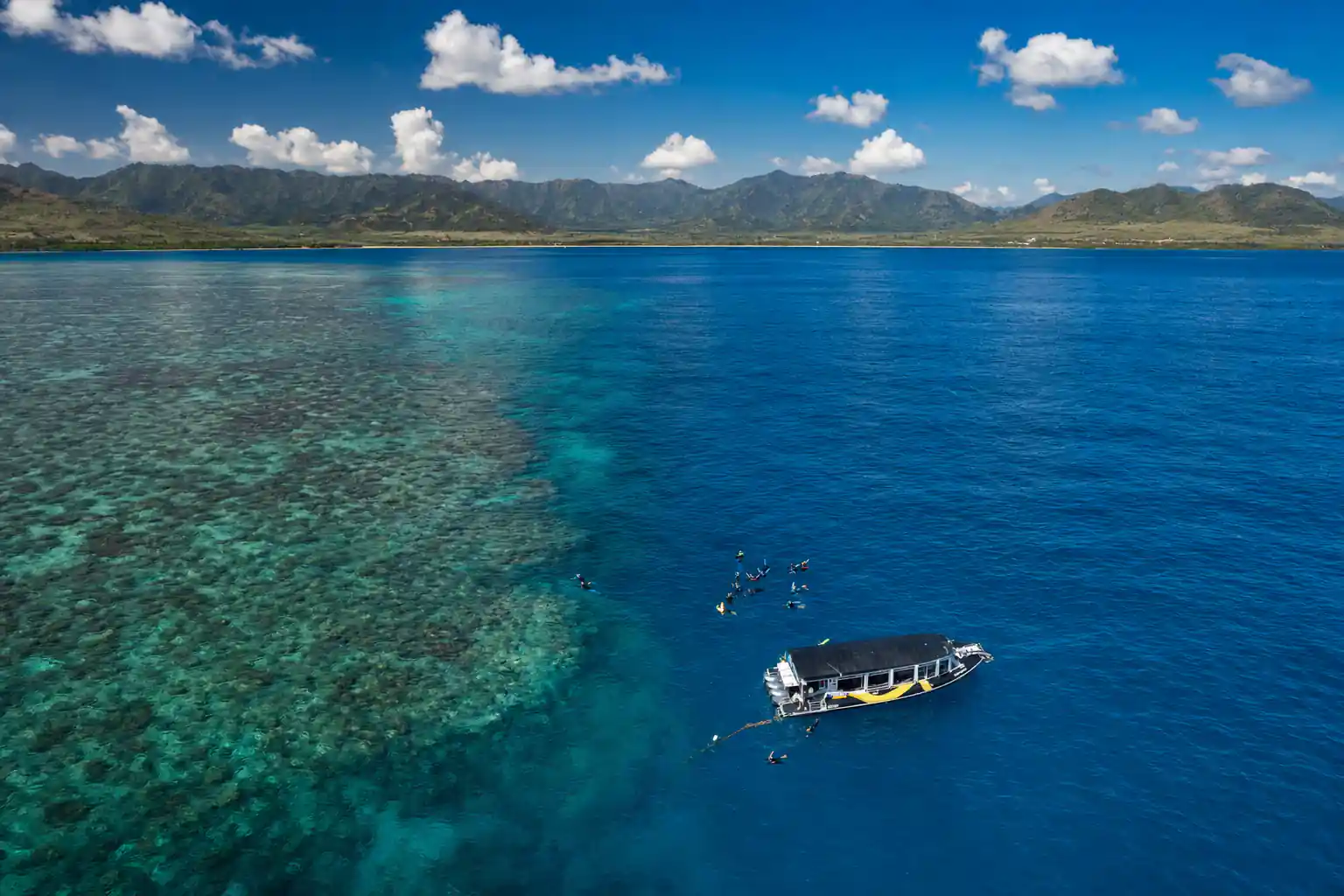
The reef top sits within easy reach of the surface, not somewhere you dive down to find.
Why a Fixed Mooring Is the Worse Option
A reef left exposed to open swell on a rough morning will be churned and cloudy to snorkel, whatever the coral underneath is like. A reef sitting in the lee of the wind, or in calmer water that day, will be clearer and easier going, even if it is the less familiar of the two. Knowing the difference before the boat leaves the marina is the crew's job.
For the visitor this cuts the opposite way from how it sounds. A trip that always goes to the same named reef, whatever the forecast, offers certainty and nothing else. A trip that picks between two, based on the actual conditions that morning, trades that certainty for a better chance at clear water once you are in it. Neither reef is being sold as the better one. The conditions on the day decide which one is.
Coral and Fish at the Reef Top
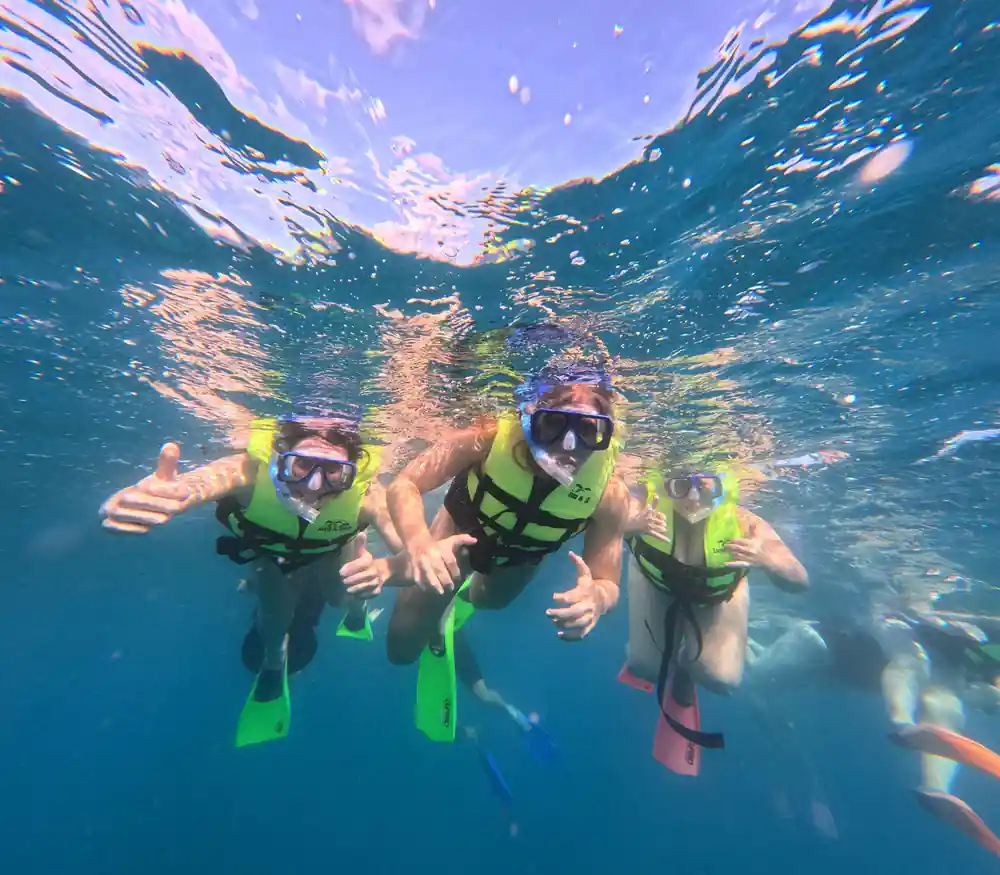
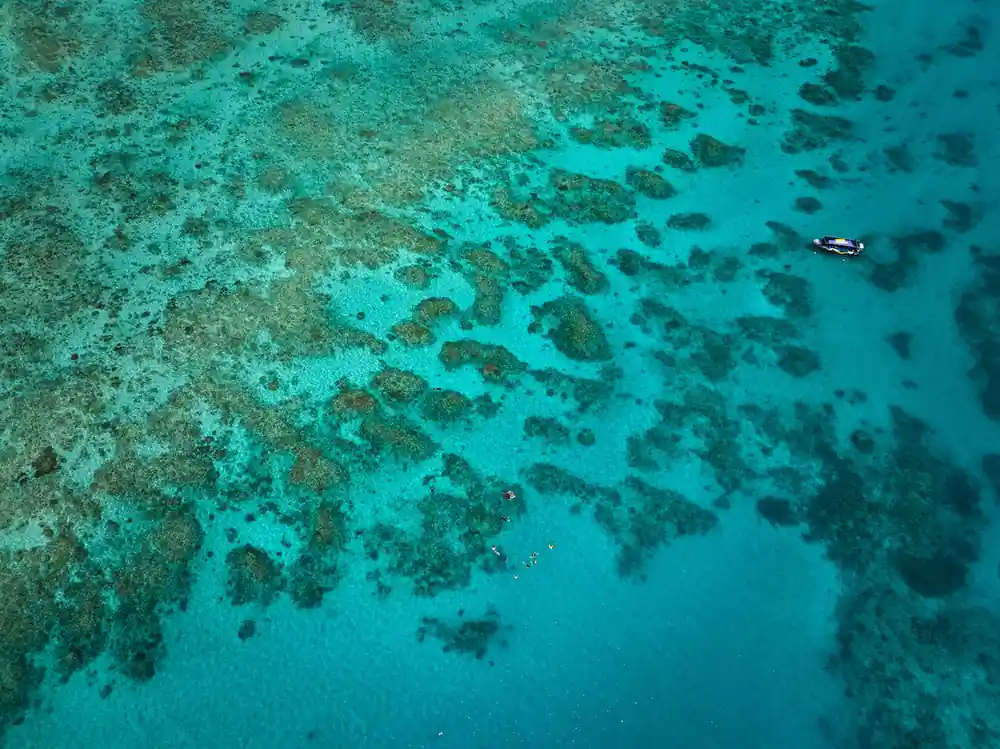
Snorkelling happens on the reef top, the shallow shelf where coral grows thickest and daylight still reaches the bottom. Put your face in the water here and the first thing that registers is how close everything is: hard coral in solid stands, soft coral moving with the surge, all within easy reach of the surface rather than somewhere you would need to dive down to see.
Fish move over that coral in real numbers, not as an odd sighting but as a constant presence once your eyes adjust to looking for them. Follow the reef top outward and it does not taper away gently. It drops. The edge where the shallow shelf gives way to open water is one of the more striking things to look down into, even from the surface.
1.5 hours
That is how long a snorkel guide stays in the water with the group, at whichever reef the boat moors at that day.
What You Might See in the Water
The reef supports hard and soft corals and the reef fish that live around them: parrotfish grazing on the coral itself, wrasse moving in and out of the structure, and clownfish holding territory in their anemones. Giant clams sit half buried among the coral, and blue sea stars turn up often enough on the sand between coral heads.
Green turtles are seen on this stretch of reef too, surfacing for air or grazing before diving again. None of this is guaranteed on any one trip. A reef is a living system, not a display case, and what shows up on the day depends on the same conditions that decided which reef you were taken to in the first place.
Because the two reef sites are not the same patch of water, what turns up can vary between them as well. A day when the crew moor at one site and a day when they moor at the other are not guaranteed to look the same underwater, even before the ordinary unpredictability of a living reef is added on top of that.
Guided Time on the Reef Top
A snorkel guide gets in the water with the group rather than staying on the boat. That is the difference between someone who can point out what is worth looking at on this reef top today, and a ladder with a time to be back by. The guided portion of the trip runs to 1.5 hours, spent moving across the reef top rather than staying in one patch of water.
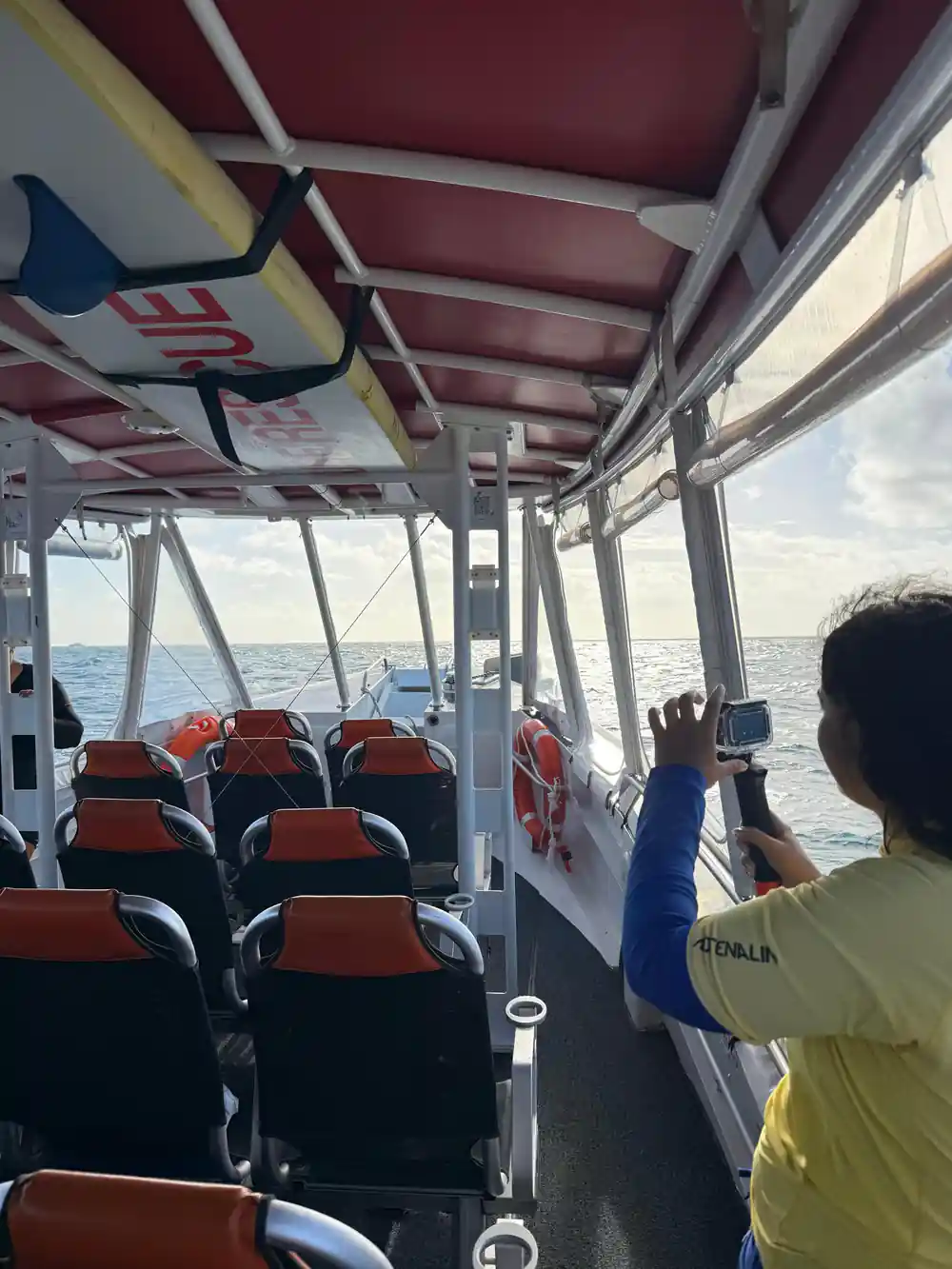
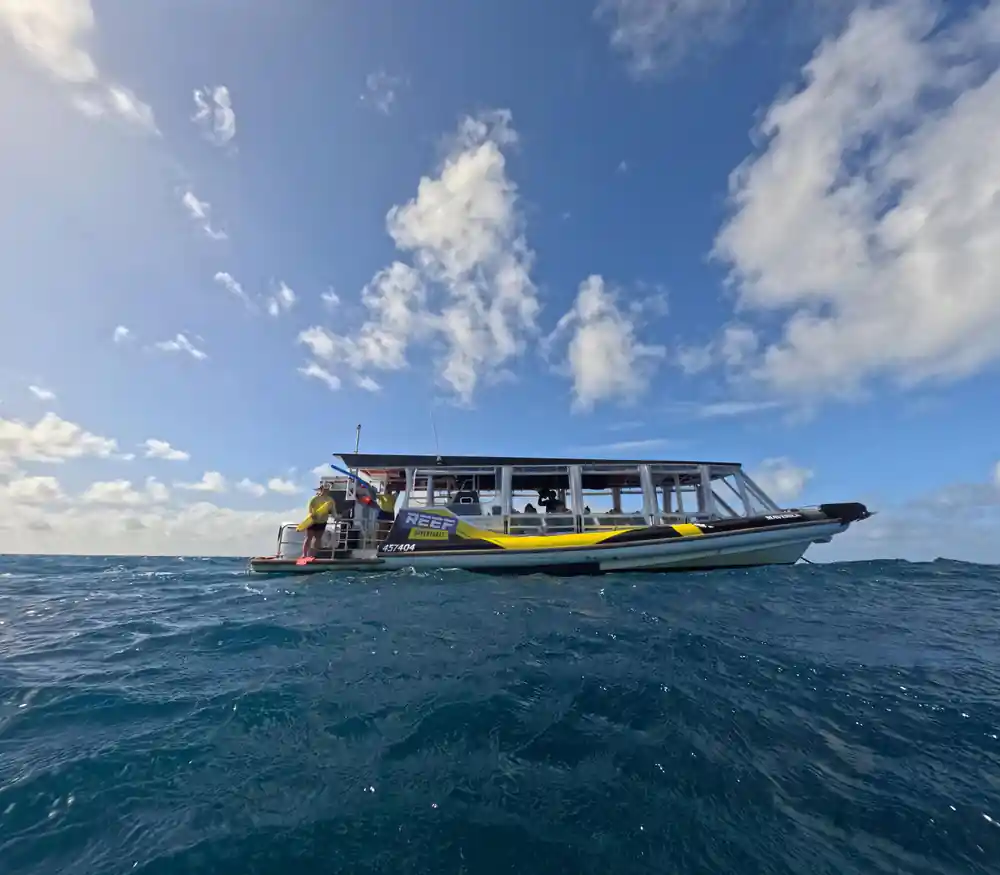
Getting out to whichever reef is chosen that day is done on one of the operator's fast vessels, as part of a half-day trip that runs to four hours from the Cairns Marlin Marina. That adds up to a solid block of guided snorkelling and a boat back before the day is half done, at whichever of the best places to snorkel the Great Barrier Reef offers from Cairns turns out to be working best that morning.
Snorkelling equipment, a flotation device and, in season, a stinger suit are provided for the trip, whichever reef you end up at. None of that changes with the choice of site. What changes is the water you are wearing it in, not what you are given to wear.
Two reefs, one half-day trip to the Great Barrier Reef
from US$126Reserve now & pay later