Quick summary
- From May to October, the dry season offers sunny skies, low humidity and warm weather; the wet season, about December to March, brings heat, humidity and afternoon rain.[1]
- Winter water averages around 24°C and summer water averages 29°C, so you can swim comfortably all year.[2]
- From November through to May, jellyfish risk is higher, so follow the crew's advice about stinger suits.[3]
- Yes, you can snorkel the Great Barrier Reef in July; it falls in the dry season and June and July account for 90% of dwarf minke whale sightings.[1][4]
- The Cairns half-day snorkelling tour runs 4 hours, costs from US$125 and offers free cancellation up to 24 hours ahead.[5]
| Dry season | Wet season | Stinger season | |
|---|---|---|---|
| Months | May to October[1] | December to March[1] | November through to May[3] |
| Feel | Sunny skies, low humidity[1] | Hot, humid, afternoon showers[1] | Higher jellyfish risk[3] |
| Water | 24°C in winter[2] | 29°C in summer[2] | Warm; follow crew advice on suits[3] |
| Wildlife | Dwarf minke whales, June and July peak[4] | Outer reef coral spawn November or December[6] | Inshore coral spawn October[6] |
While marine stingers may be present throughout the entire year in tropical Queensland, the risk associated with these two types of potentially dangerous jellyfish are higher during the 'marine stinger season' that typically runs from November through to May.
Any Month Works, If You Plan for the Season
When to go
When to Snorkel Great Barrier Reef
The Great Barrier Reef is the world's largest coral reef system, spanning more than 2,300 kilometres along the northeast coast of Australia and made up of some 3,000 individual coral reefs.[9] It is home to over 1,600 species of fish, over 600 species of corals and six of the world's seven species of marine turtle.[10] That scale is hard to grasp until you are floating face-down above a coral garden, watching a turtle glide past.
The real question is not whether to go, but finding the best time to go snorkeling at the Great Barrier Reef. Trips run all year from Cairns, and each month has its own character. From May to October, the dry season delivers sunny skies, low humidity, and warm comfortable days.[1] Roughly December to March is the wet season: hot, humid, and marked by regular afternoon downpours that leave the rainforest and nearby areas lush.[1] Neither season closes the reef, and both produce memorable days on the water.
A good way to decide is to think about what you want from the trip. If you dream of warm water and do not mind a tropical shower, the wet season is delightful. If you want the most reliable weather for a short stay, the dry season is hard to beat. Booking a tour with free cancellation gives you room to adapt if your plans shift.[5]
The Dry Season: May to October
For most first-time visitors, the dry season is the easiest introduction. From May to October the weather is consistently sunny and the humidity stays low.[1] The half-day tour from this site runs 4 hours, a comfortable length for a reef outing.[5] In the water, winter temperatures hover around 24°C, cool enough to refresh but warm enough to stay in for an hour.[2]
July is a standout for wildlife lovers, because dwarf minke whales migrate to the northern Great Barrier Reef every Australian winter from May to August, with June and July accounting for 90% of sightings.[4] Yes, you can snorkel the Great Barrier Reef in July; on a typical trip you may spot a whale from the boat or hear about one from the crew.[4] Winter sun also gives crisp light over the reef flats, where shallow coral gardens glow in blues and greens.
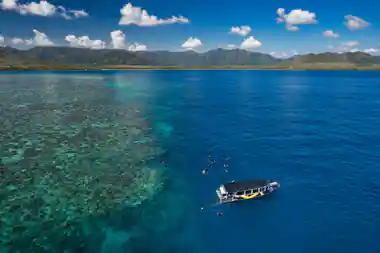
A fast boat carves a curved wake across turquoise water on the way to the outer reef.
The Wet Season: December to March
The wet season is warmer, stickier and greener. From roughly December to March the region is hot and humid, with frequent afternoon showers.[1] The upside is a lush, vivid landscape and the warmest water of the year, reaching around 29°C in summer.[2] Afternoon rain often clears to golden light, and the reef's shallow gardens are just as beautiful under a passing cloud as in full sun.
Wet-season snorkelling works well if you take the season seriously. Marine stinger season in tropical Queensland typically runs from November through to May, when the risk from dangerous jellyfish is higher.[3] The answer is not to skip the water; wear a stinger suit and follow the crew's advice. Yes, you can snorkel the Great Barrier Reef in the wet season, as long as you listen to the crew and cover up.[1]
The practical rhythm of a wet-season reef day is simple: an early start, a fast boat, and a snorkel before the heat builds. Afternoon showers are usually brief; bring a light rain jacket for the ride back and enjoy the dramatic clouds over the coast.
Stinger Season and Reef Health
Stinger season is simply part of life in tropical Queensland. From November through to May the risk from potentially dangerous jellyfish is higher.[3] Stinger suits are the usual answer, and they also protect against sunburn. Follow the crew's advice on when to wear them.
Reef health is also heading in the right direction, at least on the northern stretches. According to the latest AIMS monitoring, hard coral cover in the northern Great Barrier Reef has risen from 30.0% in 2025 to 35.1% in 2026.[11] For snorkellers, healthy coral means dense gardens, more fish and better visibility over the shallows.
A useful cost note: the Great Barrier Reef Environmental Management Charge is $8.50 per day for a full-day passenger.[8] Budget for it alongside your tour price, and you will not be surprised at the terminal.
from US$125
Half-day Great Barrier Reef snorkelling from Cairns: 4 hours, English-speaking instructor, free cancellation up to 24 hours in advance.[5]
Coral Spawning and Wildlife Timing
If you want to plan around one of the reef's great natural events, think about coral spawning. On the Great Barrier Reef, inshore reefs typically spawn in October, while outer reefs spawn during November or December.[6] During spawning, corals release eggs and sperm into the water in a brief, spectacular pulse that attracts fish from across the reef. It is a rare chance to see the reef renewing itself, and it draws snorkellers who want more than a typical day trip.
Winter brings its own highlight. Dwarf minke whales arrive from May to August, with June and July accounting for 90% of sightings.[4] Summer months bring the warmest water and the lush wet-season landscape. Whatever your month, there is a reason to be on the water, and a half-day tour gives you a window into it without using your whole day.[5]
Practical Travel: Cairns and the Reef
Cairns is the natural launch point for a first reef trip. Reef boats depart from the Reef Fleet Terminal at 1 Spence Street, Cairns.[7] Plan your arrival the night before if you can; a fresh start makes the early boat ride easier.
For a shorter trip, take the catamaran to Green Island, 27 kilometres from Cairns, which takes about 45 minutes.[12] It is a good option when time is tight or the sea looks lively. If you prefer a quieter base, Port Douglas is a short drive north of Cairns, and Hardy Reef in the Whitsundays is approximately 80 km offshore from Airlie Beach.[13]
Whichever harbour you choose, the routine is the same: check in, collect your mask and fins, and follow the crew's safety briefing before the boat noses out past the headland. On the way back, keep an eye out for dolphins riding the bow wave.
The Half-Day Tour from Cairns
Booking through this site gives you the Cairns: Great Barrier Reef Half-Day Snorkelling Tour, priced from US$125 and lasting 4 hours.[5] An English-speaking instructor leads the trip and can help you fit your mask and read the reef.[5] Reserve today and pay later; if your plans change, cancel at least 24 hours in advance for a full refund.[5]
A half-day is the perfect length for most travellers: enough time to reach the reef, snorkel properly, and still have the afternoon free for the Cairns Esplanade, a rainforest walk or just a long lunch. If you have more time, full-day options such as a Green Island cruise start from US$77.[14] Whichever you choose, the same seasonal advice applies: know the season, wear the gear, and let the crew look after the rest.
Distances to plan around
Compare reef trip prices
Adult from-prices in US dollars from[5],[16] and[14].
When to go and when to book
Plan your reef day
Choose your month
Match the season to your style: dry season from May to October for sunny days, wet season for warm water and green landscapes.[1]
Book a half-day tour
Starting at US$125, the trip lasts 4 hours, includes an English-speaking instructor, and has free cancellation with 24 hours' notice.[5]
Pack for the water
Bring sunscreen, a hat and a change of clothes; wear a stinger suit when the season calls for it.
Meet at the terminal
Reef boats depart from the Reef Fleet Terminal at 1 Spence Street, Cairns.[7]
Allow travel time
Allow for the boat ride to the outer reef and keep the rest of your day flexible.
Go with the season
Minke whales peak in June and July; coral spawning runs October to December.[4][6]
Pick your month, then lock in your Cairns half-day reef snorkel at the best rate.
from US$126Reserve now & pay later