Quick summary
- The half-day tour lasts 4 hours, with an English-speaking instructor, and is priced from US$125.[1]
- From Cairns, Reef boats leave the Reef Fleet Terminal, 1 Spence Street, Cairns.[2]
- Cairns experiences its dry season from May to October and its wet season from December to March.[3]
- The reef is home to over 1,600 fish species, over 600 coral species and six of the world's seven species of marine turtle.[4]
- Book now and pay later; cancellation remains free until 24 hours before.[1]
- Top choice Cairns Half-Day Snorkel from US$125 Duration4 hours[1]Rating4.73[1]CancellationFree up to 24 hours[1] Check availability
- Green Island Cruise from US$78 Duration5 - 9 hours[5]Rating4.38[5]CancellationFree up to 24 hours[5] See this tour
- Scenic Reef Flight from US$167 DurationValid 40 minutes[6]Rating4.88[6]CancellationFree up to 24 hours[6] See this tour
While marine stingers may be present throughout the entire year in tropical Queensland, the risk associated with these two types of potentially dangerous jellyfish are higher during the ‘marine stinger season’ that typically runs from November through to May.
The shortest path to the reef
Getting ready
What a Guided Snorkel Actually Means
A guided snorkel removes most of the mystery. The Great Barrier Reef spans more than 2,300 kilometres along the northeast coast of Australia and is made up of some 3,000 individual coral reefs.[10] You do not need your own boat, your own gear knowledge, or a detailed plan, and you do not need to be an experienced swimmer. If you have been wondering how to go snorkeling in Great Barrier Reef without spending a whole day organising it, a guided half-day trip is the simplest answer. You just turn up, follow the crew, and let the reef do the rest. For anyone new to open water, the value of a guide is confidence: someone else watches the conditions, knows where the boat stops, and can help you read the water before you swim.
The tour booked through this site is a half-day trip from Cairns that lasts 4 hours and costs from US$125.[1] An English-speaking instructor is on board, and the listing lets you reserve now and pay later.[1] You also get free cancellation up to 24 hours in advance, which is useful when tropical weather or travel plans shift.[1] For a first visit, this short format keeps the day simple and leaves time for the rest of your Cairns holiday. It is a realistic first taste rather than a promise that you will tick off every reef highlight in one morning.
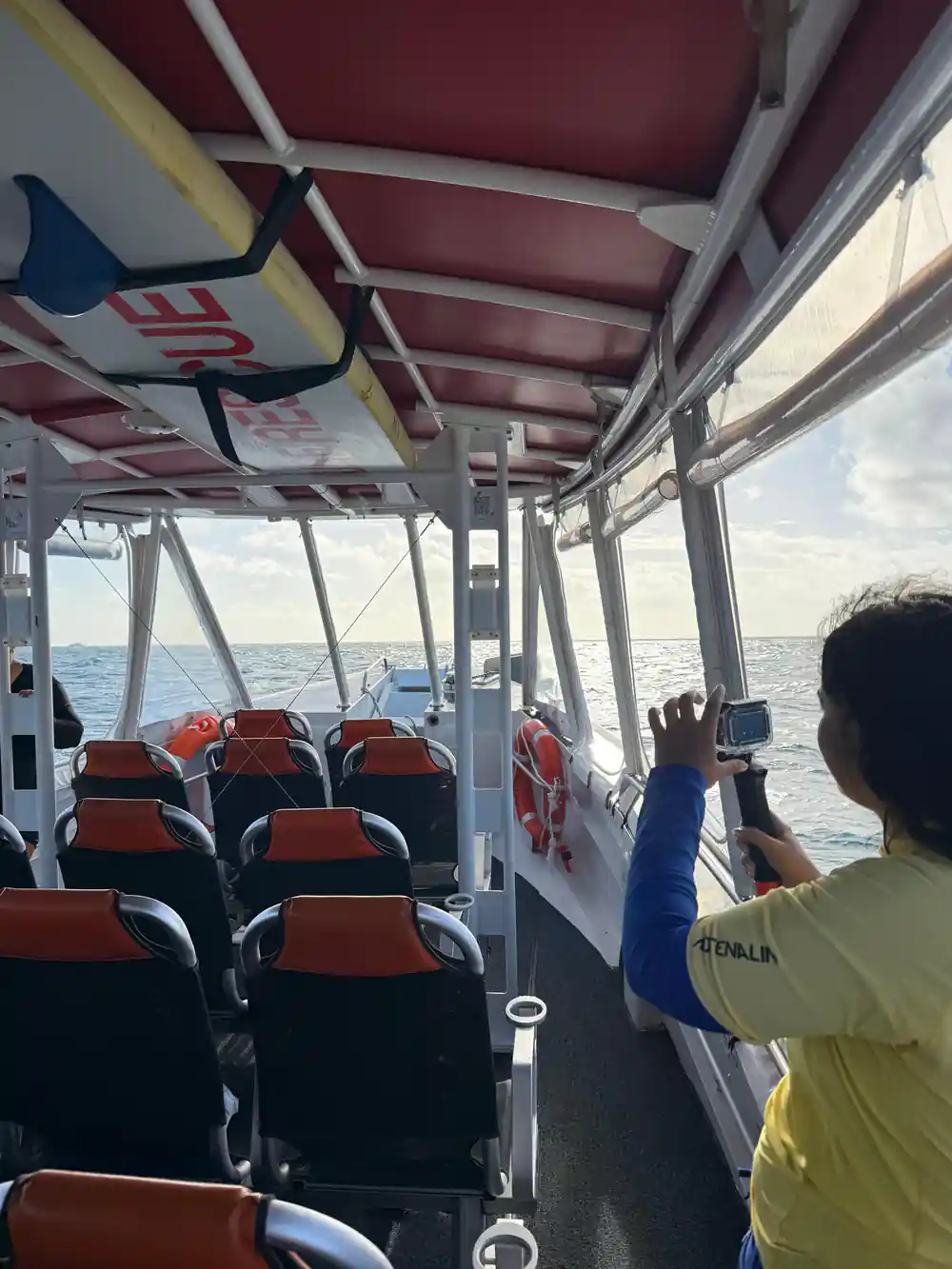
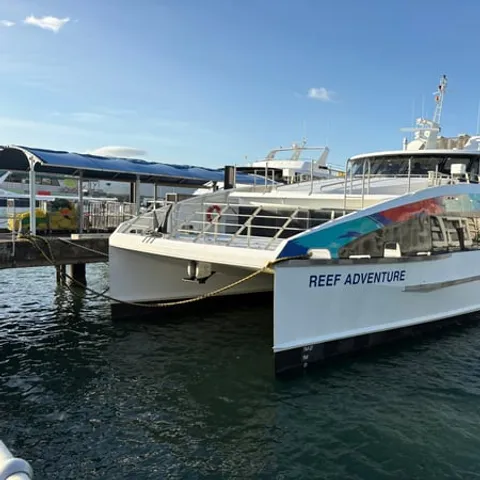
Check-in is straightforward. From Cairns, Reef boats leave the Reef Fleet Terminal, 1 Spence Street, Cairns.[2] If the boat heads to the outer reef, you might end up at a pontoon sitting 47 km offshore on the Outer Reef.[11] On the way, watch the city disappear, listen to the briefing and get your mask fitted before you jump in. The crew knows the route, so you can relax and enjoy the trip out. If you have never been on a reef boat, ask about seating before you board; the crew is happy to point out the best spot for a smooth ride.
Time in the Water, Honestly
A half-day trip does not mean endless hours floating over coral. The whole outing lasts 4 hours.[1] It is a compact experience, not an all-day adventure. That is still enough time to feel the change of pace, get comfortable in the water, and come back with a proper memory of the reef. The pace suits people who prefer quality over quantity.
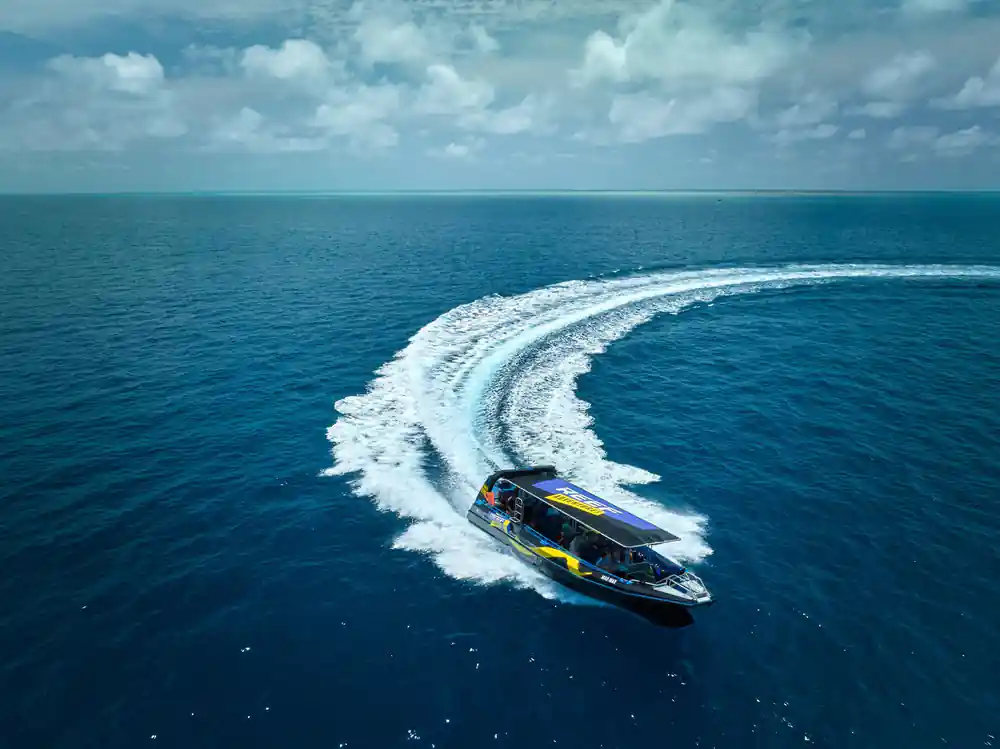
The boat ride is part of the fun, especially if you are heading to the outer reef. One well-known pontoon sits 47 km offshore on the Outer Reef, and the water gets clearer as you leave the coast.[11] Sitting near the middle of the vessel can help if you are worried about motion, and the crew are used to first-timers who need a bit of reassurance. Looking back at the coastline as you motor out is part of the pleasure, especially on a clear morning.
Once you are in, temperature matters less than you think. In summer (December to February), the reef's average water temperature is 29°C, while in winter (June to August) it is 24°C.[7] If you feel cold, move slowly, keep your body relaxed, and get out for a moment to warm up; nobody is timing you. Breathing slowly through the snorkel is the trick that makes everything easier. If the sun is strong, remember that the water magnifies it; a cap or a rash vest helps while you float.
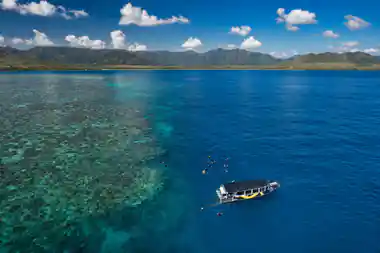
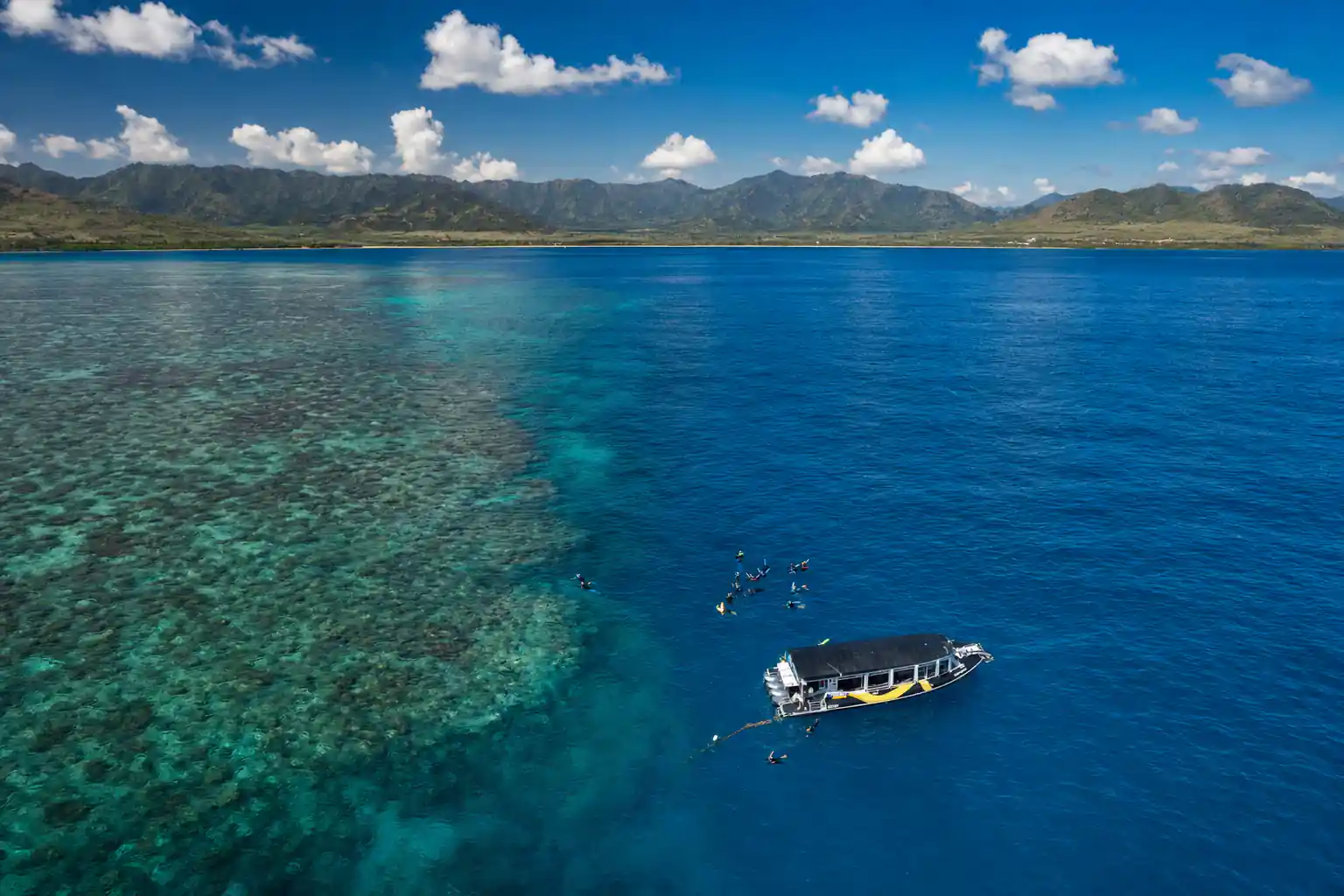
A reef boat floats above a wide turquoise lagoon as snorkellers spread out from the platform.
Staying With the Group
The easiest way to enjoy a guided snorkel is to treat it as a team activity. Stay near your instructor, keep your buddy in sight, and do not swim off on your own. The crew will have a route in mind, and following it saves time and keeps everyone safe. A group also makes it easier to notice things you might swim straight past on your own. This is not a solo challenge; a reef is easier to enjoy when you are relaxed and near people you trust.
Your instructor is English-speaking.[1] If you are unsure how to clear a flooded snorkel or equalise pressure in your ears, ask before you get in. It is much harder to sort out gear while you are floating, so use the time on board to practise the simple moves. Check that your mask sits comfortably on your face; a small leak is annoying, but a simple adjustment usually fixes it.
In the water, use simple signals. Pointing at something exciting, tapping your tank, or giving a thumbs up all work. If you need help, raise your hand and stay calm; help is only a few strokes away. Check your buddy before you put your face in, and check again when you come up. The best snorkellers in the water are often the quietest; moving slowly creates less noise and more sightings.
Resting Without Getting Out of the Water
One skill that changes everything is learning how to rest without leaving the water. Roll onto your back, let your buoyancy hold you, and relax your neck while you breathe. This lets you catch your breath while staying close to the group, and it also gives your legs a break. Try it close to the boat first so you know how your body responds.
A flotation aid makes resting even easier. Crews on reef trips are used to first-timers, so there is no shame in using a noodle or life jacket. You can also hold onto the boat platform or a float line if the crew has one out; the point is to keep your energy for looking down at the reef. A short pause at the surface can be enough to take in the wide lagoon around you. If you are tired, signal the crew and swim back to the platform; there is no prize for pushing on.
When you are ready, put your face back in the water and let your breathing settle. You will see more by moving slowly and staying relaxed than by rushing from one coral head to the next. The reef does not go anywhere, and the slower you swim, the more it shows you. Notice how your breathing slows once you stop kicking; that calm feeling is when the reef opens up.
from US$125
This half-day experience runs 4 hours, comes with an English-speaking instructor, and offers free cancellation if cancelled up to 24 hours in advance.[1]
Before You Get In: Kit and What to Expect
Before you get in, think about the seasons. The dry season in Cairns lasts around May to October, and the wet season around December to March.[3] In the dry season you get sunny skies, low humidity, and pleasant warm days; the wet season, by contrast, is hot and humid, with regular afternoon rains that maintain the lush landscape.[3] Either season can work for snorkeling, but your packing list changes slightly. A half-day trip can be the easiest way to fit the reef into a shorter stay.
When travelling in warmer months, note that tropical Queensland's marine stinger season usually runs November to May, when dangerous jellyfish pose more risk.[8] Ask the crew for a stinger suit and wear it if you are at all unsure; it is a small change and it makes a big difference. A rash vest or thin lycra top also protects your back from the sun while you float. Wearing a suit is not about comfort alone; it lets you spend more time looking down and less time worrying.
A Reef Environmental Management Charge applies to commercial reef trips: $8.50 per day for a full-day passenger.[9] Plan for it in your budget so there are no surprises at the terminal. It is a small price to pay for a day on the reef, and knowing about it in advance keeps the day simple.
Who This Trip Is and Is Not For
This half-day tour is a good fit if you are short on time, new to snorkeling, or travelling with people who do not want to commit to a full day on the water. It lasts 4 hours and starts from US$125, which makes it an easy yes for many itineraries.[1] It also pairs well with a Cairns city morning or an afternoon in town. For a small group with different energy levels, it offers a clear middle ground.
It is less suited to experienced divers or people who want to spend hours exploring many different reef sites. For that, you would book a longer expedition. The half-day format is about getting a genuine taste of the reef, not covering every corner of it. You come back with a real sense of the reef rather than a checklist, and the water is what matters most.
If you are still making up your mind, the booking terms help. Reserve today and settle up later; cancellation remains free until 24 hours before, so you stay flexible.[1] That flexibility makes it easier to say yes, especially when the weather is doing its own thing. If the forecast looks rough, the free cancellation window is a useful backstop.
What a Guide Might Point Out
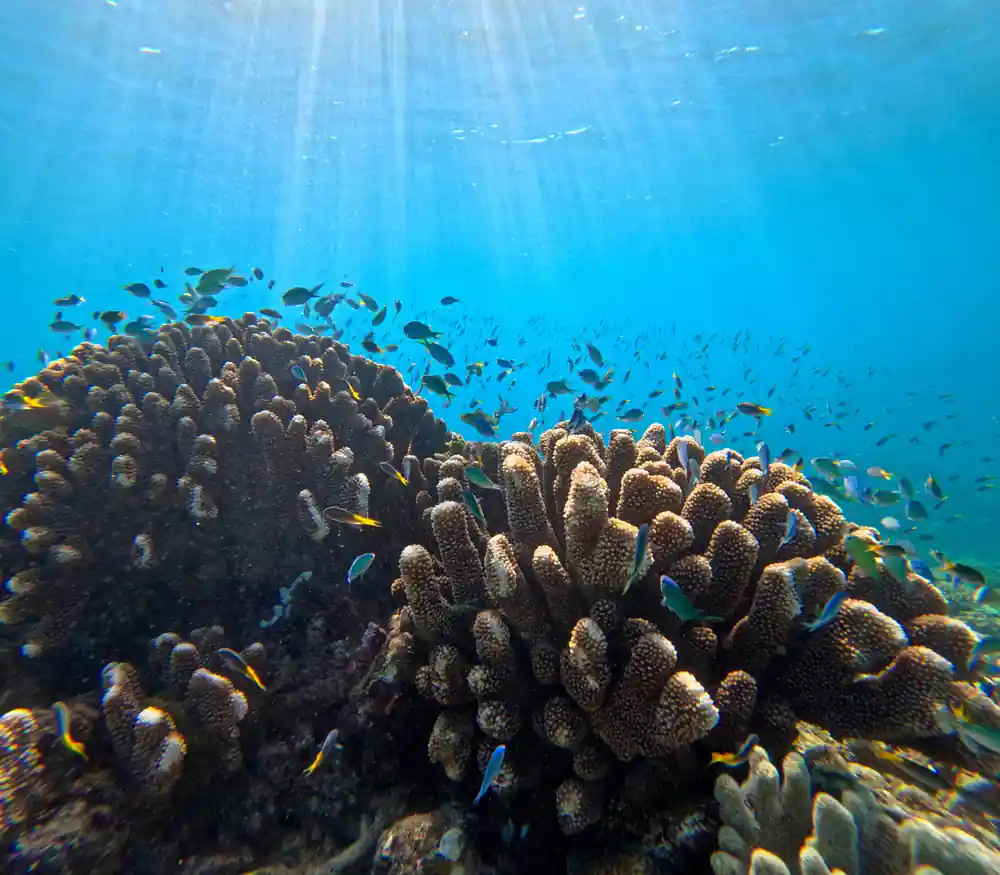
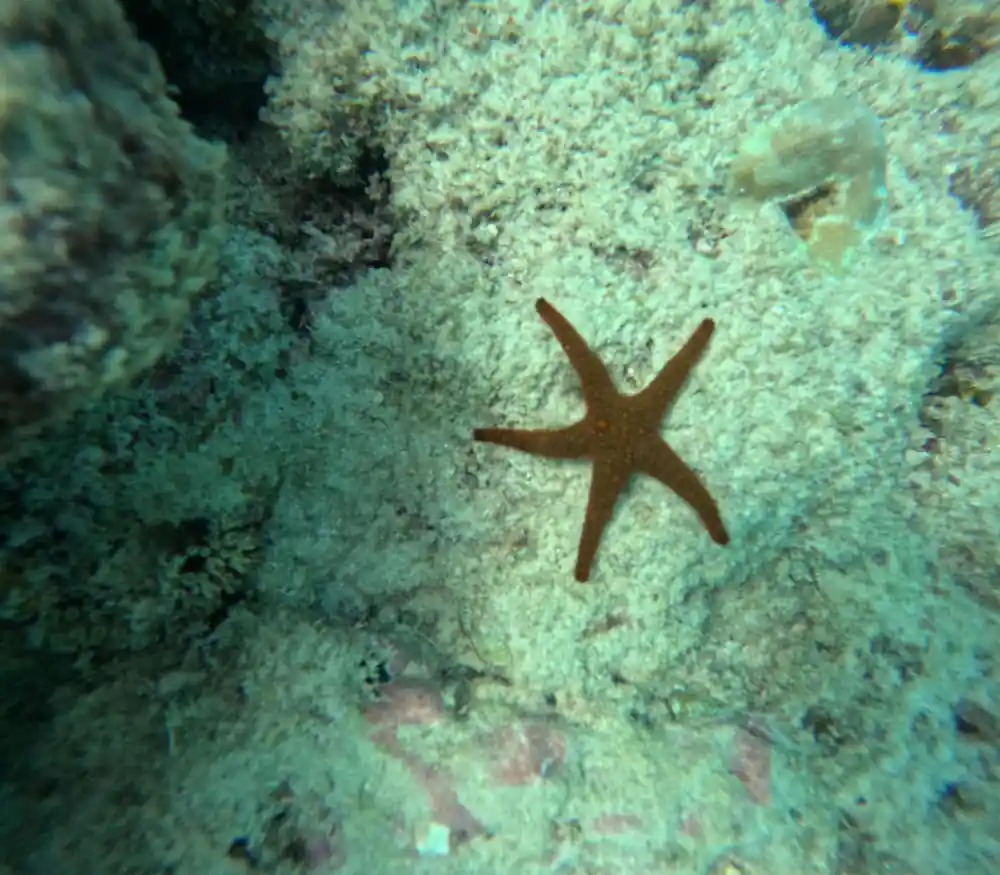
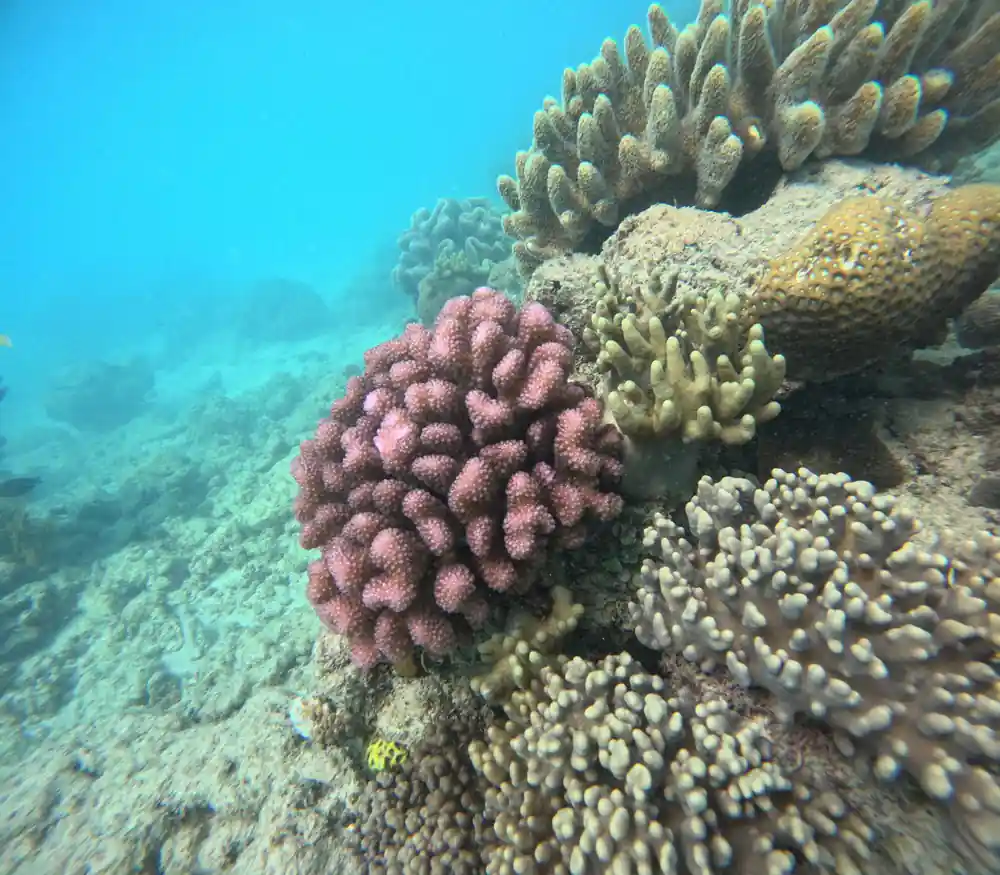
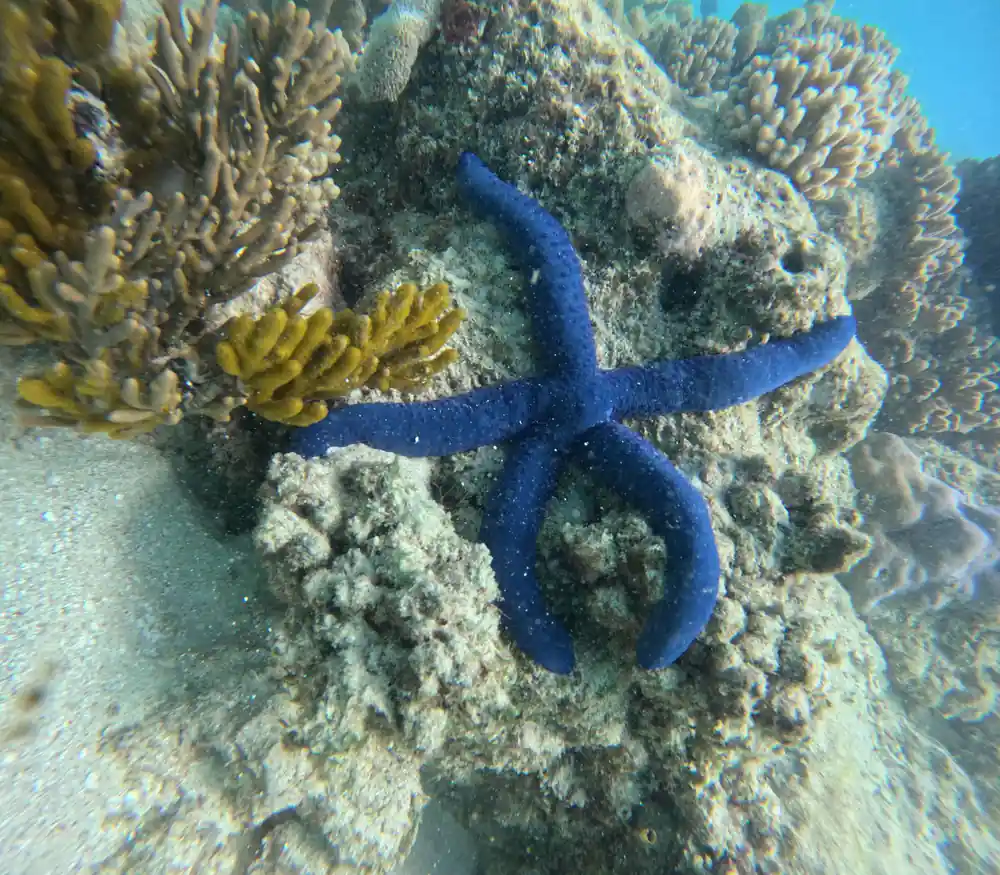
Once you are in the water, a good guide turns a pretty swim into a lesson in reef life. You might hear about coral spawning: on the Great Barrier Reef, inshore reefs typically spawn in October, while outer reefs spawn during November or December.[12] Do not feel you have to remember every species name; the colours and shapes will stay with you longer than the facts. Listen for practical details too, such as which coral shapes indicate healthy growth and where the sandy gutters sit.
On trips north of Cairns, guides also watch for seasonal visitors. Dwarf minke whales migrate to the northern Great Barrier Reef every Australian winter from May to August, with June and July accounting for 90% of sightings.[13] Even a distant glimpse is a moment you will talk about later. Whale sightings are seasonal, so ask the crew what they have been seeing that week.
Reef health is another talking point. On the northern part of the Great Barrier Reef, hard coral cover on average rose from 30.0% in 2025 to 35.1% in 2026.[14] That detail can change how you look at the coral below you, and the crew can show you examples of new growth as you swim. The same patch of reef can look different in morning and afternoon light, so keep your eyes open on every snorkel.
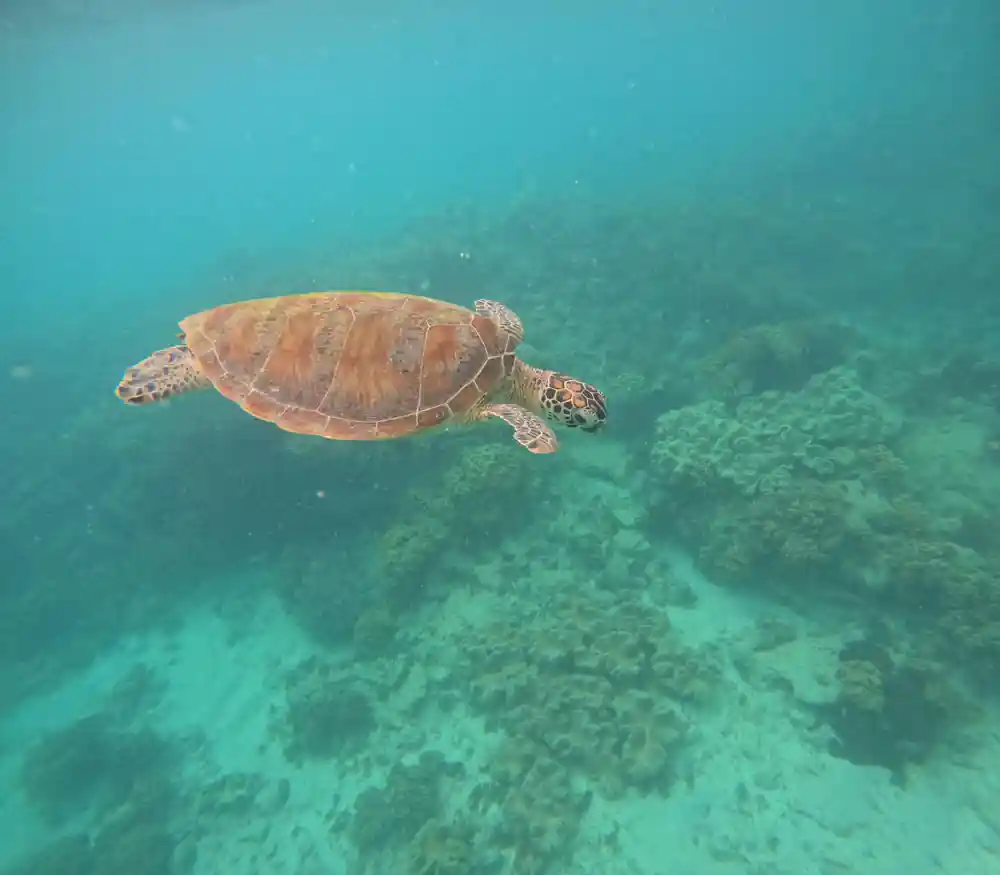
What lives on the reef
Counts from[4].
Compare from-prices
US-dollar from-prices from GetYourGuide listings:[1],[15],[6].
When to book your reef day
Getting ready for the reef
Book your place
Choose the half-day tour from Cairns, from US$125, with free cancellation up to 24 hours in advance.[1]
Meet at the terminal
Reef boats depart from the Reef Fleet Terminal at 1 Spence Street, Cairns.[2] Give yourself time to check in.
Pack light
Pack swimmers, a towel and sunscreen; the whole outing lasts 4 hours.[1]
Listen to the briefing
An English-speaking instructor explains how to use the mask, snorkel and fins.[1] Ask questions before boarding.
Stay with the group
Stay with the group, use a flotation aid if needed, and float on your back to rest.
Ready to get in the water on a half-day guided snorkel from Cairns?
from US$126Reserve now & pay later