Quick summary
- This snorkelling trip sets a hard ceiling of 27 guests for every departure, not an average that some sailings run under and others go past.
- Kitting up with a mask, fins and, in season, a stinger suit takes a queue, and with fewer guests waiting behind you, that queue is shorter.
- Twenty-seven people entering the water together at one anchor point have more space to spread out than a much larger boatload would at the same spot.
- A snorkel guide is in the water with the group, and keeping 27 people in view is a different job from watching a boat carrying far more.
The number this trip is built around
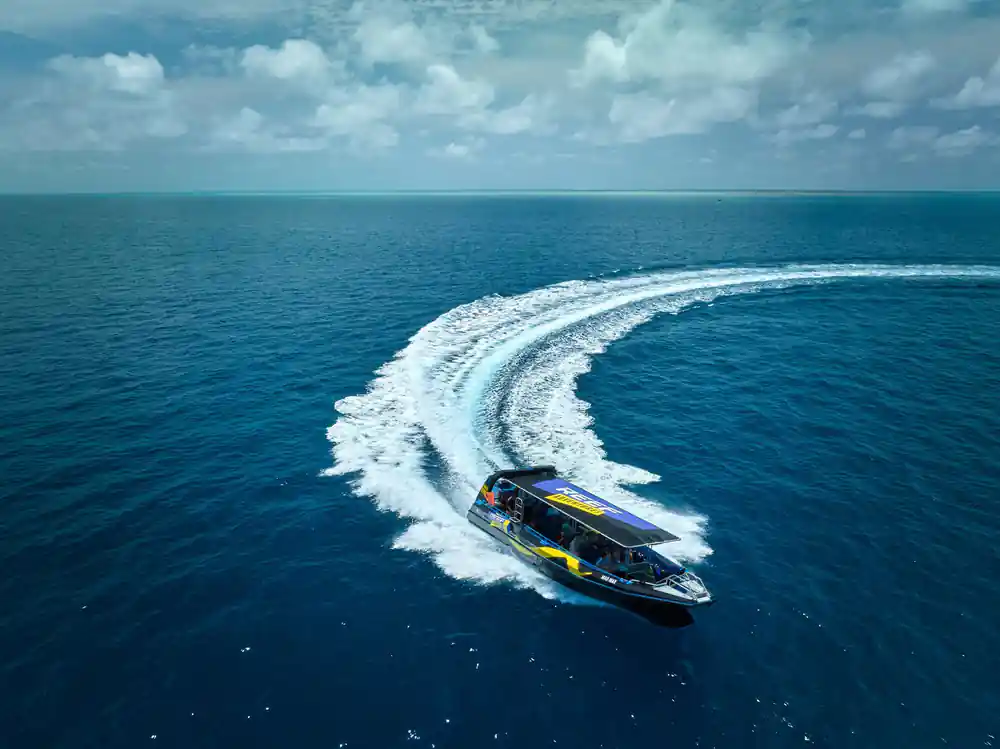
Twenty-seven is not a marketing figure, it is a ceiling. This is a four hour half day out of Cairns, with a fast vessel run out to one of two reefs and 1.5 hours of guided snorkelling once you get there. Everything else on the day, the queue to kit up, the space at the anchor point, how easily a guide can keep the group together, works out from that one number rather than from how the trip happens to be described.
It also runs three times a day, so the cap of 27 applies separately to each departure rather than describing one much busier sailing. A large reef catamaran starts from a different shape altogether: many more guests in a single group, moving through kitting up, entry and the return leg together as one much bigger unit. Neither approach is wrong. They are simply different ways of using the same hours in the water.
Getting from the boat into the water
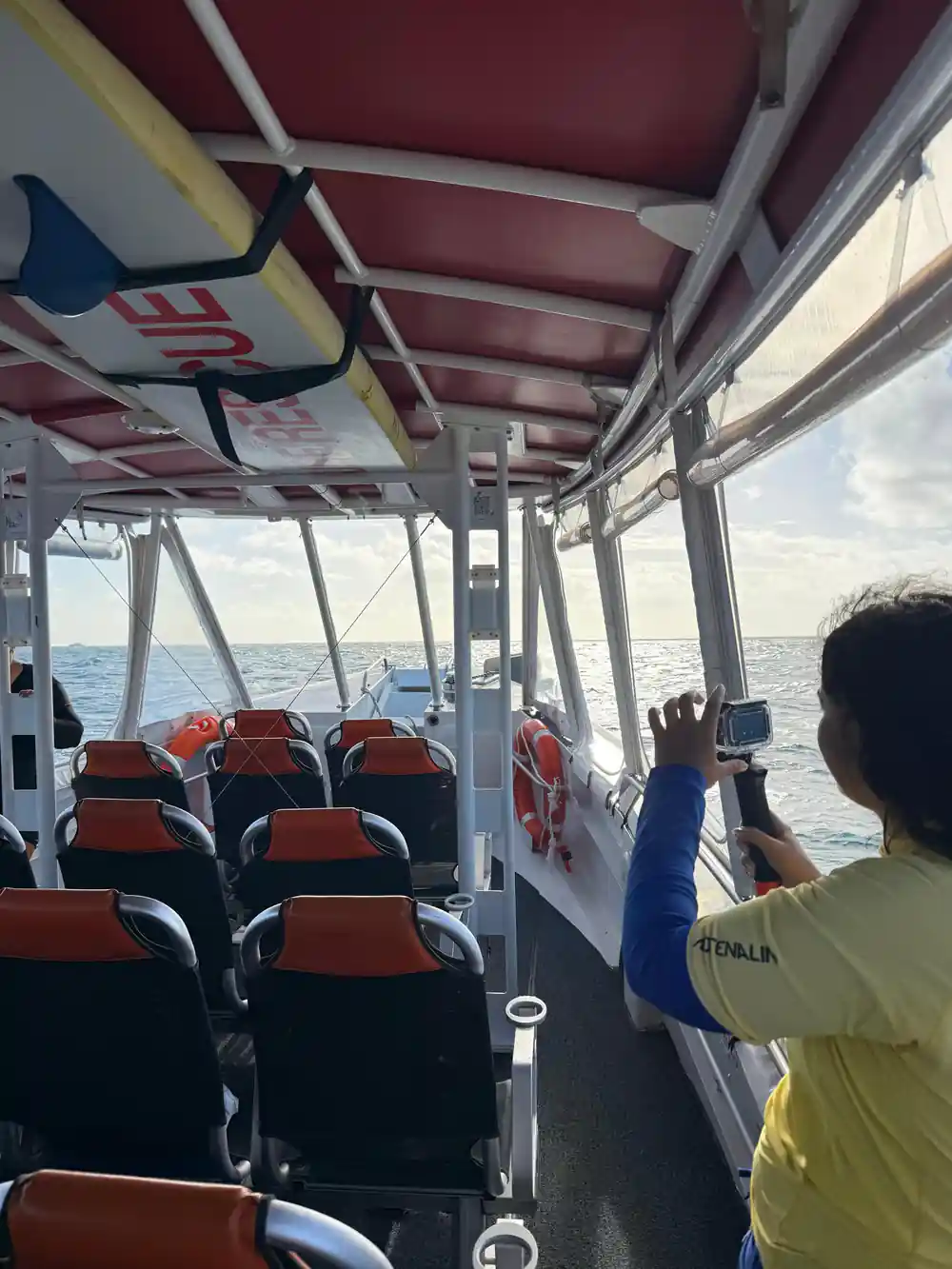
Before anyone snorkels, everyone gets fitted: a mask, fins, a flotation device, and in stinger season a full suit. That fitting happens one person at a time, however many people are aboard, so the size of the queue behind you is set directly by how many guests there are. With a cap of 27 rather than a much larger group, the line to be kitted up and briefed is shorter, and more of the four hours is spent in the water rather than waiting on deck for a turn.
That matters more on this trip than it would on a longer one, because the guided snorkelling itself is 1.5 hours within a four hour half day that also has to cover the boat ride out to the reef and back. A slow queue eats directly into a fixed window with little slack in it, and there is no second reef stop later in the day to make up the time. A fast one hands that time straight back to the water instead.
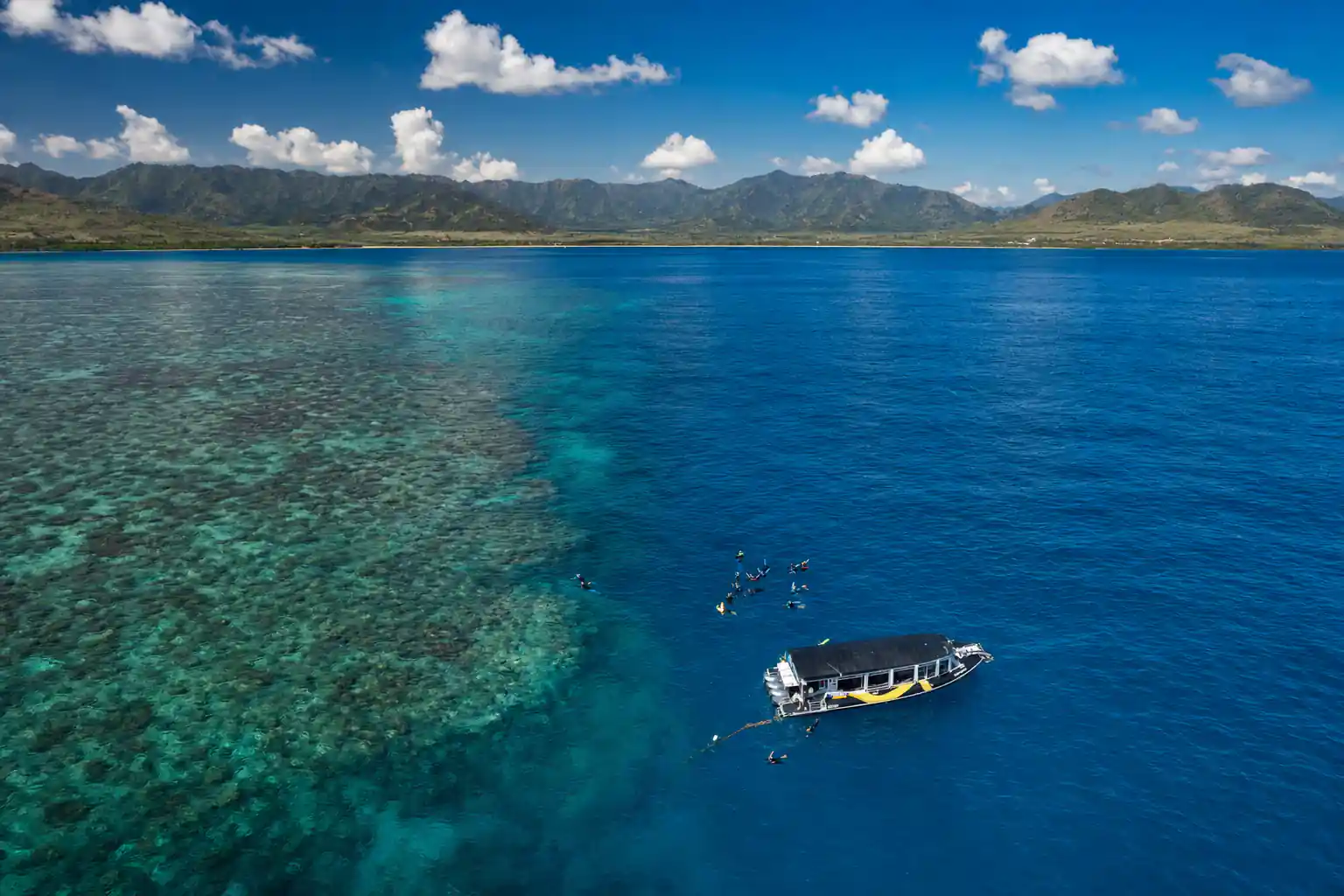
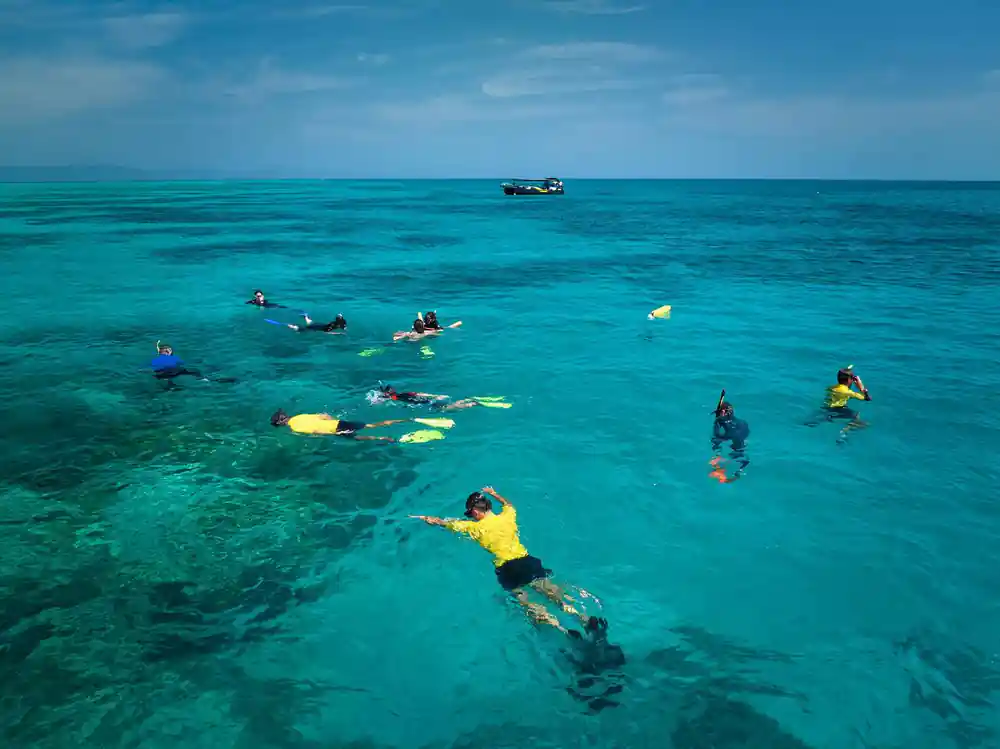
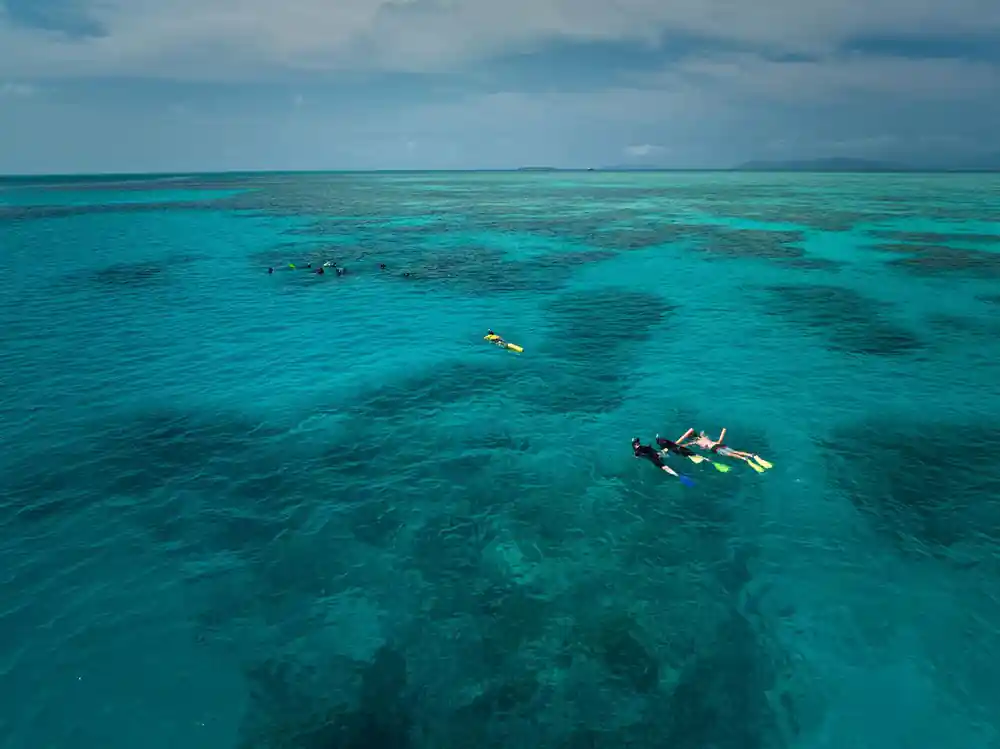
The guided group heads out from the vessel at the reef's anchor point.
How much room there is at the reef
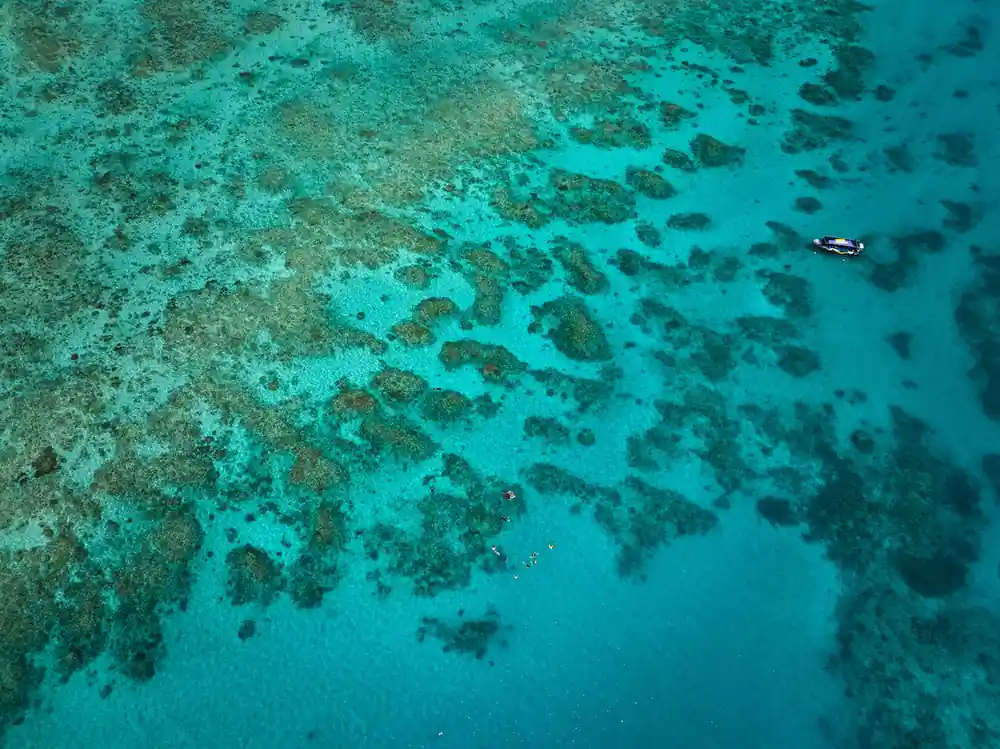
The reef itself does not get any bigger because fewer people are visiting it. What changes is how many bodies are sharing the same stretch of water at the same time. Twenty-seven guests entering at one anchor point can spread across the site without being stacked on top of each other's fins, in a way that is harder to manage when a much larger group goes in together.
That is a statement about crowding, not about what you will see. Nothing about a smaller group changes what is living on the reef on a given day. Shallow Queensland reef tops typically hold hard and soft corals, reef fish, giant clams and the occasional green turtle, but none of it is guaranteed, on this trip or any other, and a lower guest count does not change the odds.
Why a guide can keep track of the group
A snorkel guide gets in the water with you rather than watching from a ladder and waiting for you to come back by a set time. That distinction matters most in open water, where drifting apart from the group is easy to do without noticing. Watching over a capped group of 27 is a materially different task from watching over a boat carrying substantially more, simply because there are fewer heads to account for at any one moment.
That advantage compounds over the 1.5 hours of guided snorkelling: a guide who can take in the whole group at a glance is better placed to notice early if someone drifts off course, tires, or needs a hand back to the boat, rather than the group having to look out for itself. Flotation devices are handed out to everyone regardless of group size, but a guide who can actually see you wearing one is what turns that equipment from a formality into something that gets used when it matters.
27 guests
The maximum number of guests on any departure of this tour, and the figure the whole day is planned around.
The briefing, and turning the boat around
The safety briefing before you go in covers the same ground regardless of how many guests are aboard: how to use the equipment, what a stinger suit is for in season, what to do if you get separated from the group, and where the boat will be when you surface. Running through that with 27 people rather than a much bigger crowd takes less time, because fewer people means fewer questions asked one at a time and less waiting for the last person to be fitted and ready.
The same logic applies at the reef itself and back at the marina: getting everyone out of the water, back aboard, and settled takes less time with fewer guests to move through the process. That is part of how a single vessel can run three separate departures across the day instead of one long one.
What a smaller group does not do
A smaller cap is not automatically the better choice for every traveller, and it is worth saying plainly where it falls short. A larger reef catamaran is a bigger, steadier platform: broader in the beam, less affected by chop, and generally built with more onboard facilities and more shaded deck space than a smaller vessel carries.
It also gives you more room to put distance between yourself and people you do not know, simply because there is more boat to spread across even though there are more guests on it. If what you want most from the day is stability underfoot and space to sit apart from strangers, that is a genuine trade-off against the smaller, more closely run group this trip offers.
See today's availability for the small group snorkelling trip
from US$126Reserve now & pay later